

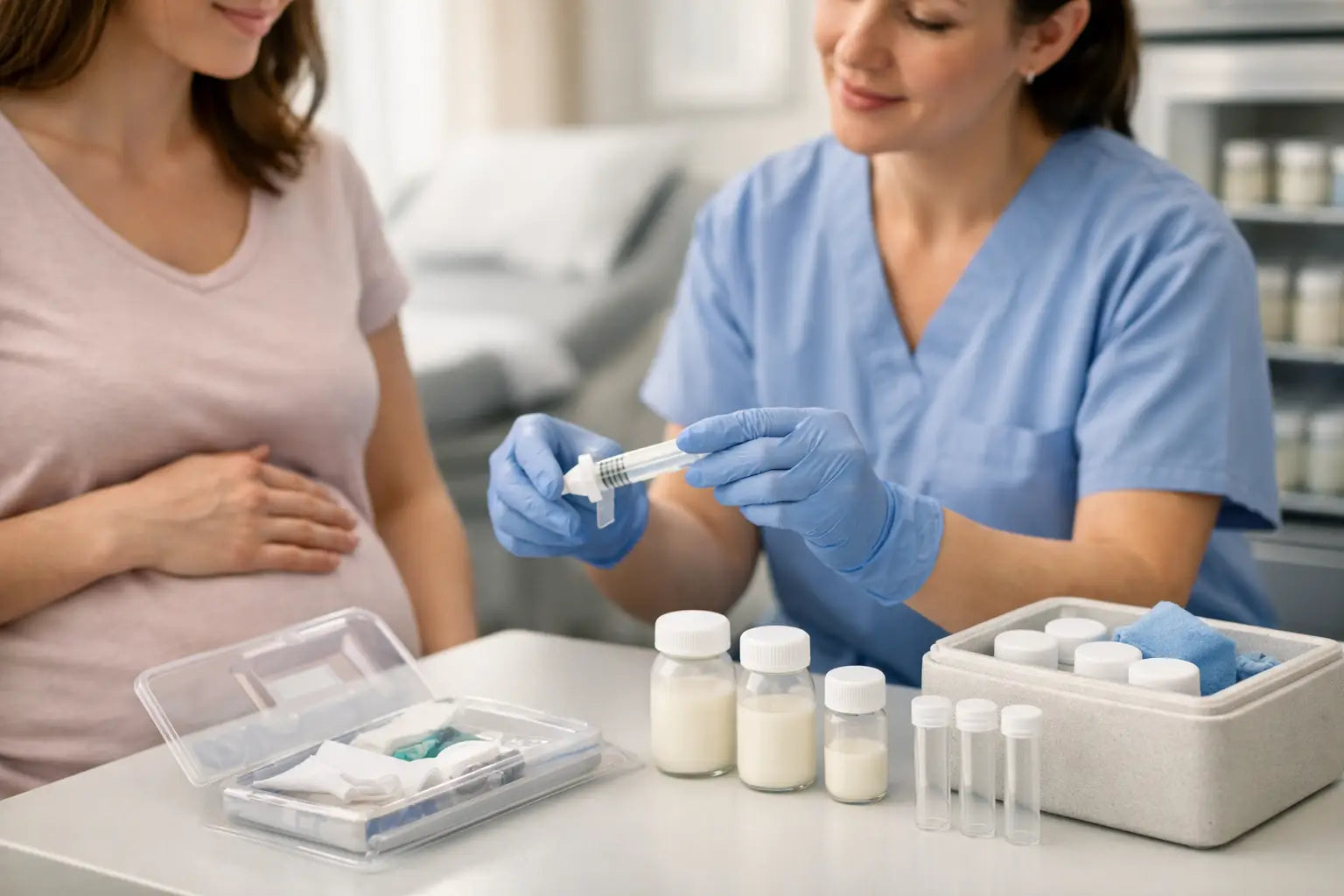
Those first sticky golden drops can feel surprisingly significant. If you are wondering how to collect colostrum before birth, you are likely preparing with care, and that matters. For some mothers, antenatal colostrum collection offers reassurance before delivery. For others, it may be recommended for a medical reason. Either way, gentle guidance makes all the difference.
Colostrum is the very first milk your body makes. It is small in volume but rich in antibodies, immune factors, and concentrated nutrition. Because every drop counts, some mothers choose to hand express and store colostrum during late pregnancy so it is available after birth if baby needs extra support.
When learning how to collect colostrum before birth makes sense
Collecting colostrum before birth is not something every pregnant woman needs to do. Many mothers do not express anything antenatally and still go on to breastfeed beautifully. This is where nuance matters.
A care team may suggest antenatal expressing if you have diabetes in pregnancy, are expecting twins, have a planned cesarean birth, have a history of breastfeeding challenges, or know your baby may need extra feeding support in the early hours. Some mothers also feel calmer having a small supply ready in case baby is sleepy or separated from them after birth.
At the same time, it is not always appropriate. Hand expressing can stimulate the breasts, and because nipple stimulation may encourage uterine activity, you should always check with your obstetrician, midwife, or lactation consultant before starting. If you have a history of preterm labor, a short cervix, vaginal bleeding, placenta concerns, or your doctor has advised pelvic rest, this conversation is especially important.
When to start collecting colostrum before birth
In most cases, if your provider approves it, mothers are advised to start around 36 to 37 weeks of pregnancy. Earlier is not necessarily better. The goal is not to build a large freezer stash. It is simply to collect small amounts safely and comfortably.
Some women see drops right away. Others get only a glisten on the nipple. Some never collect much at all before birth. None of these outcomes predict your future milk supply. Your body is not failing if the syringe stays nearly empty. Colostrum comes in tiny volumes by design.
How to collect colostrum before birth safely
The safest and most effective way to collect colostrum before birth is usually by hand expression, not with an electric pump. Colostrum is thick and produced in very small amounts, so hand expression tends to work better and gives you more control.
Start by washing your hands well and preparing a clean collection container, such as a sterile colostrum syringe or a small sterile cup. Find a quiet place where your shoulders can soften. Warmth can help, so some mothers express after a shower or use a warm compress on the breast for a few minutes first.
Support your breast with one hand and place your thumb and finger about an inch or so behind the nipple, forming a C shape. Gently press back toward the chest wall, then compress your fingers together and release. It is a press-compress-release rhythm rather than a sliding motion on the skin. Reposition your fingers around the areola as needed and stay gentle. Colostrum often appears as tiny beads rather than a spray.
If drops form on the nipple, you can collect them with a sterile syringe or spoon them into a clean container. Then repeat on the other side. A session may last only five to ten minutes total at first. Once or twice a day is often enough unless your provider has given different guidance.
If you feel cramping, discomfort, or contractions that do not settle, stop and speak with your provider.
What supplies you may need
You do not need a complicated setup. Usually, clean hands, patience, and the right collection tool are enough. Sterile colostrum syringes are especially helpful because they are designed for tiny amounts and make storage simpler. Labels are also useful so you can note the date and time collected.
Some mothers find that having soothing breast care on hand helps them feel more comfortable during late pregnancy and early feeding. Simple, mother-friendly tools can make preparation feel calmer and more supported.
How much colostrum is normal to collect?
Very small amounts are normal. You may collect 0.5 mL, 1 mL, or a few drops at a time. That is still valuable. Colostrum is concentrated, and newborn stomachs are tiny in the first days.
It helps to let go of the idea that more is better. Antenatal expression is about gentle preparation, not performance. Your body may produce little one day and a bit more the next. Try not to measure your success by volume.
How to store colostrum before birth
Once collected, colostrum should be stored according to your provider’s guidance and your local maternity hospital instructions. In many cases, the expressed colostrum is placed into a sterile syringe, capped, labeled with your name, date, and time, and stored in the freezer.
If you collect more than once in a day, ask your care team whether you can add cooled colostrum to an already frozen syringe or whether separate containers are preferred. Hospital protocols vary, and following your birth facility’s rules is the best approach.
When labor begins or you are preparing for a scheduled birth, bring the frozen colostrum in an insulated bag with ice packs if your hospital has advised this. Let your care team know you have it with you so it can be stored properly on arrival.
Common concerns about antenatal colostrum collection
One of the biggest worries mothers have is whether collecting colostrum before birth will somehow "use it up." It will not. Your breasts continue producing colostrum, and after birth your milk production shifts in response to hormones and frequent milk removal.
Another common concern is not seeing any milk at all. This can feel discouraging, especially if you were hoping to feel ready before baby arrives. But the absence of visible colostrum in pregnancy does not mean you will not have enough milk after birth. Breastfeeding is influenced by many factors after delivery, including skin-to-skin contact, latch, feeding frequency, and early support.
There is also the question of whether a pump should be used. Before birth, hand expression is usually preferred. Pumps are often less effective for thick early colostrum and may create stronger stimulation than necessary. After birth, a lactation consultant can help you decide when pumping is appropriate and which setup is best for your body and baby.
When to ask for extra support
If you are unsure whether you should start, if expression feels painful, or if you have a history that makes feeding feel emotionally loaded, please reach out for personalized guidance. This is especially true if you are carrying a high-risk pregnancy or expecting a baby who may need special care.
Expert support can also help if you are collecting colostrum because of gestational diabetes, previous low milk supply, flat or inverted nipples, or an upcoming cesarean. In those situations, technique and timing can make the process feel much easier.
For mothers who want both reassurance and practical tools, a brand like Noora Motherhood can feel like a soft place to land - where thoughtful breastfeeding essentials meet lactation-led guidance and genuine care.
What to expect after birth
Even if you have collected colostrum before delivery, the priority after birth is still early and frequent feeding at the breast whenever possible. Skin-to-skin contact, responsive feeding, and support with latch matter deeply in those first hours and days.
Stored colostrum can be especially helpful if baby is sleepy, blood sugars need monitoring, or temporary supplementation is recommended. In that case, your expressed colostrum gives your baby your own milk first, which many mothers find deeply reassuring.
Still, it is only one part of the picture. A small frozen supply does not replace feeding support after birth, and it does not need to. Think of it as a gentle backup, not a test you have to pass.
Preparing for your baby often brings a mix of tenderness, planning, and uncertainty. If you decide to collect colostrum before birth, let it be a quiet act of care rather than a source of pressure. A few drops can be enough. You are doing amazing, mama, and your body deserves both trust and expert support as you get ready to meet your baby.


