

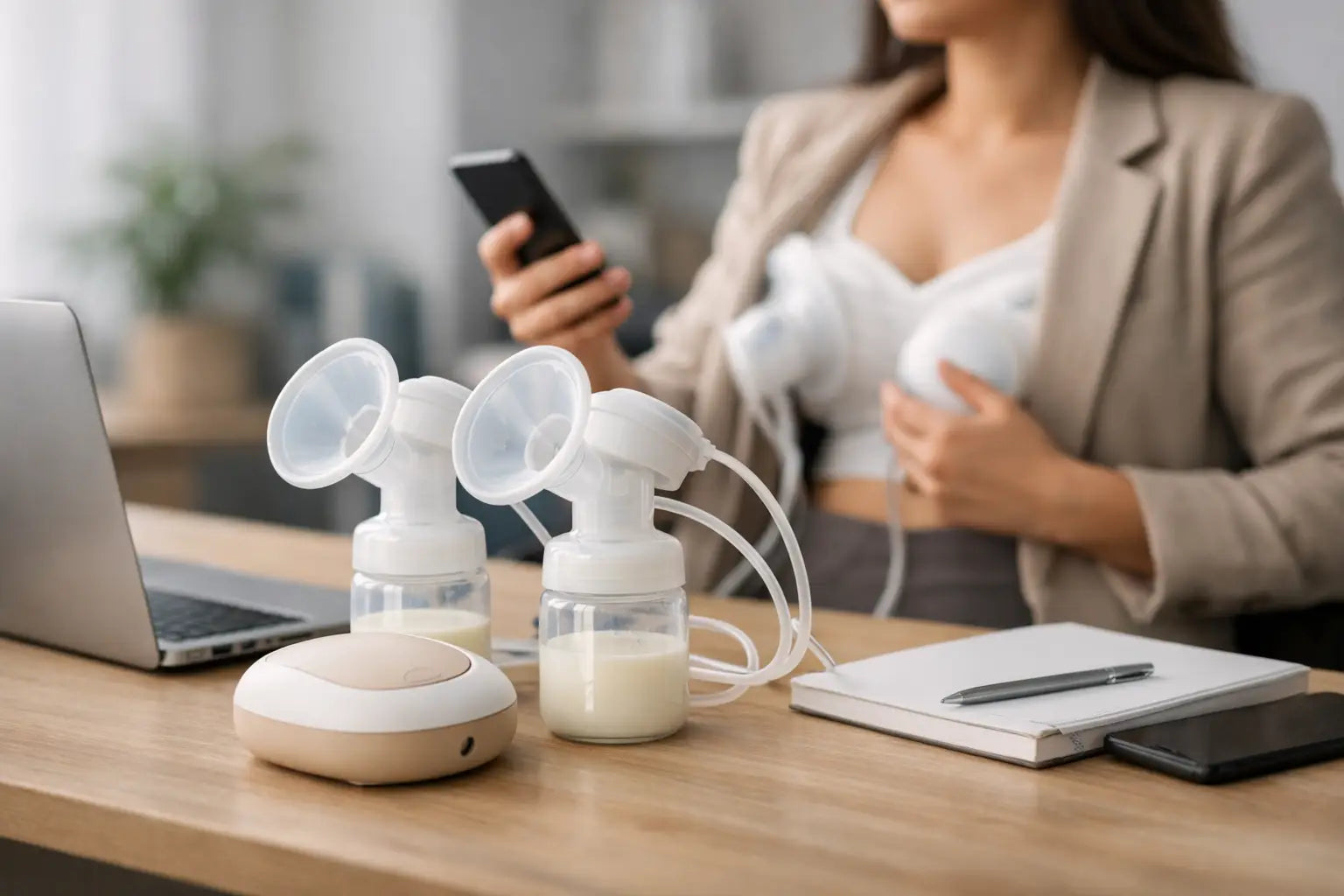
The first week back at work can feel like a math problem no one prepared you for. Meetings, commute time, pumping breaks, milk storage, sore nipples, low sleep - and somewhere in the middle of it all, you are still trying to care for your body and protect your breastfeeding rhythm. Choosing the right breast pump for working moms can make that transition feel far less heavy.
Not because any pump can erase the reality of postpartum life, but because the right one can give you comfort, efficiency, and a little more breathing room. And when your day is already full, that matters.
What working moms really need from a breast pump
A breast pump that works well at home is not always the one that works well at the office, in the car before daycare drop-off, or during a short break between calls. Working mothers usually need a pump that fits into real life, not an ideal routine.
That often means portability, quiet operation, and dependable suction matter just as much as output. If a pump is powerful but uncomfortable, you may start dreading sessions. If it is compact but takes too long to empty the breasts well, it may not support your milk supply consistently. The best choice is usually the one that balances performance with comfort and practicality.
This is where many mothers get stuck. They assume the strongest pump is automatically the best. In practice, fit and comfort are just as important. A pump with the wrong flange size, too much suction, or awkward positioning can leave you tender, frustrated, and less likely to pump as often as you need.
How to choose a breast pump for working moms
Start with your workday, not the product page. Think about where you will pump, how often, and how much privacy you will realistically have.
If you work long shifts or spend much of the day away from home, a portable double electric pump is often the most practical option. Pumping both sides at once can save time and may help make sessions feel more efficient. A lightweight wearable or hands-free style can also help if you need more flexibility, although some mothers find that wearable designs are wonderful for convenience but not always their best option for every session. It depends on your body, your supply, and how your breasts respond.
If you have a private pumping space and a more predictable schedule, you may prioritize strong, steady performance over compact size. If your schedule changes daily, portability becomes more valuable. There is no perfect answer for every mother. There is only the best fit for your routine.
Comfort is not a luxury
Many mothers try to tolerate discomfort because they think pumping is supposed to hurt. It should not. Some fullness or sensitivity can happen, especially in the early weeks, but sharp pain, rubbing, blanching, or lingering soreness are signs that something needs attention.
A well-designed pump should feel secure and effective without forcing your body to endure unnecessary stress. Soft materials, the right flange size, and adjustable settings all matter. Small accessories can make a meaningful difference too, especially if you pump several times a day. Flange inserts, cooling pads, silver nipple covers, and hot and cold therapy pads can support comfort before and after sessions when your body needs a little extra care.
Because every drop counts, and so does every ounce of comfort.
Quiet matters more than most mothers expect
A loud pump can add tension to an already vulnerable moment. If you are pumping in a shared workspace, a mother’s room near other offices, or even while traveling, noise level affects how relaxed and confident you feel.
A quieter pump will not automatically increase milk output, but it can make the experience less stressful. And when you feel less stressed, your pumping routine often becomes easier to maintain. That consistency is what helps over time.
Features that actually help during a workday
Marketing language can make every pump sound life-changing. In reality, a few features tend to matter most for employed mothers.
Battery life is one of them. A pump that needs frequent charging can become one more thing to manage. Reliable battery performance gives you more freedom, especially if your schedule runs long or you do not always have a convenient outlet.
Weight and size also matter. If a pump feels bulky in your bag, awkward under your clothing, or difficult to assemble quickly, you will feel that friction every day. A compact double electric pump often gives the best balance of efficiency and convenience.
Ease of cleaning is another major factor. The more parts you have to wash and dry between sessions, the more demanding your day becomes. Mothers returning to work rarely need more tasks. They need tools that respect their time.
Finally, look for intuitive controls. When you are tired and rushing, simple settings are a gift.
The trade-off between wearable and traditional pumps
Many mothers ask whether a wearable pump is automatically the best breast pump for working moms. Sometimes yes. Sometimes not.
Wearable pumps are appealing because they offer discretion and freedom of movement. For mothers who need to pump during commutes, at a desk, or between unpredictable tasks, that flexibility can be incredibly helpful. They can reduce the sense that your whole day has to stop for pumping.
Still, convenience is only one part of the decision. Some mothers respond beautifully to wearable pumps, while others find they do not empty the breasts as effectively as a more structured electric pump. If milk removal is not as effective, supply can be affected over time.
For that reason, many working mothers do best with a primary pump that is efficient and comfortable, then use wearable milk collectors or hands-free options as part of a broader routine. It depends on your goals, your output, and how your body responds after several days or weeks of use.
Why fit affects milk output
If pumping feels ineffective, the issue is not always the pump motor. Very often, it is the fit.
Flanges that are too large or too small can reduce comfort and milk removal. You may notice rubbing, swelling, pinching, or a feeling that milk is not flowing as well as it should. Mothers sometimes blame themselves when output drops, when the real issue is that the setup is not right.
This is one reason expert guidance matters. A mother-centered brand should offer more than a product box. It should help you understand what your body is telling you and support you in making adjustments that protect both comfort and supply. That level of care can make all the difference, especially when you are balancing work demands with postpartum recovery.
Building a pumping routine that feels sustainable
The best pump in the world cannot fully help if your routine is impossible to maintain. Sustainability matters more than perfection.
Try to build your pumping schedule around the natural rhythm of your workday. Some mothers pump before leaving home, once in the morning, once in the afternoon, and again after returning home. Others need more frequent sessions, especially in the early months. The right frequency depends on your stage of breastfeeding, your storage needs, and how your body responds.
What matters most is not comparing your routine to someone else’s. It is finding a pattern you can realistically keep. If a shorter, more comfortable session helps you stay consistent, that may serve you better than a setup that looks ideal on paper but leaves you exhausted.
It also helps to think beyond the pump itself. Reusable nursing pads, colostrum collectors in the early stage, nipple protection, and soothing care products can reduce the small daily discomforts that often add up. A thoughtful pumping routine supports your whole breastfeeding experience, not just milk expression.
When to rethink your current pump
If you are heading back to work and already own a pump, you may not need a new one. But there are clear signs that your current setup is not serving you well.
If pumping consistently hurts, if sessions are taking too long, if you feel tied to a wall outlet, or if the pump is so bulky that you avoid bringing it with you, those are practical problems worth addressing. The same is true if your output has changed and flange sizing or settings have never been reviewed.
Sometimes the answer is a new pump. Sometimes it is a better fit, different accessories, or more personalized support. A premium pumping experience is not about buying more than you need. It is about choosing what genuinely makes breastfeeding more manageable.
At Noora Motherhood, that philosophy matters. Mothers deserve beautiful, effective tools, but they also deserve reassurance, education, and expert care that meets them where they are.
Choosing with confidence
The best breast pump for working moms is the one that helps you continue feeding your baby without feeling like you have to disappear from your own life to do it. It should support your body, fit your routine, and make the return to work feel more possible.
You do not need a perfect schedule or a perfect postpartum journey to deserve that kind of support. You are doing amazing, mama. Choose the pump that gives you ease, not just features - and let that be one gentle way you care for yourself while caring for your baby.


