Your breasts can feel suddenly heavy, hot, tight, and far more tender than you expected. That early postpartum fullness can be intense, but it is not a sign that you are doing anything wrong. This breast engorgement guide offers gentle, practical ways to ease pressure while protecting your comfort and supporting your breastfeeding journey.
What breast engorgement feels like
Engorgement happens when your breasts become overly full with milk, increased blood flow, and fluid in the surrounding tissues. It often appears when milk production increases in the first days after birth, though it can also happen later after a longer-than-usual stretch between feeds, a change in your routine, or an abrupt change in milk removal.
The feeling is different from ordinary fullness. Your breasts may feel firm, swollen, warm, and painful. The skin can look shiny or feel stretched, and the areola may become so tight that it is harder for your baby to latch deeply. Some mothers also notice a low-grade temperature or body aches as their milk comes in.
Engorgement is common, especially in the early weeks. Still, pain deserves care. The aim is not to empty your breasts completely at every opportunity, but to relieve enough fullness for comfort and effective milk removal without signaling your body to make more milk than your baby needs.
Breast engorgement guide: gentle steps that help
The most helpful approach is frequent, responsive milk removal and a little patience. Offer the breast whenever your baby shows early hunger cues, rather than waiting for distress. In the early days, this may mean feeding often. A comfortable, deep latch matters because it helps milk flow while reducing friction and nipple tenderness.
If your breast is very firm and the areola feels too tight for an easy latch, soften the area first. Use clean fingers to apply gentle inward pressure around the base of the nipple for a minute or two. This can move some swelling back into the breast and create a softer area for latching. Hand expression of a small amount of milk can also relieve pressure. Think comfort and softness, not a full draining session.
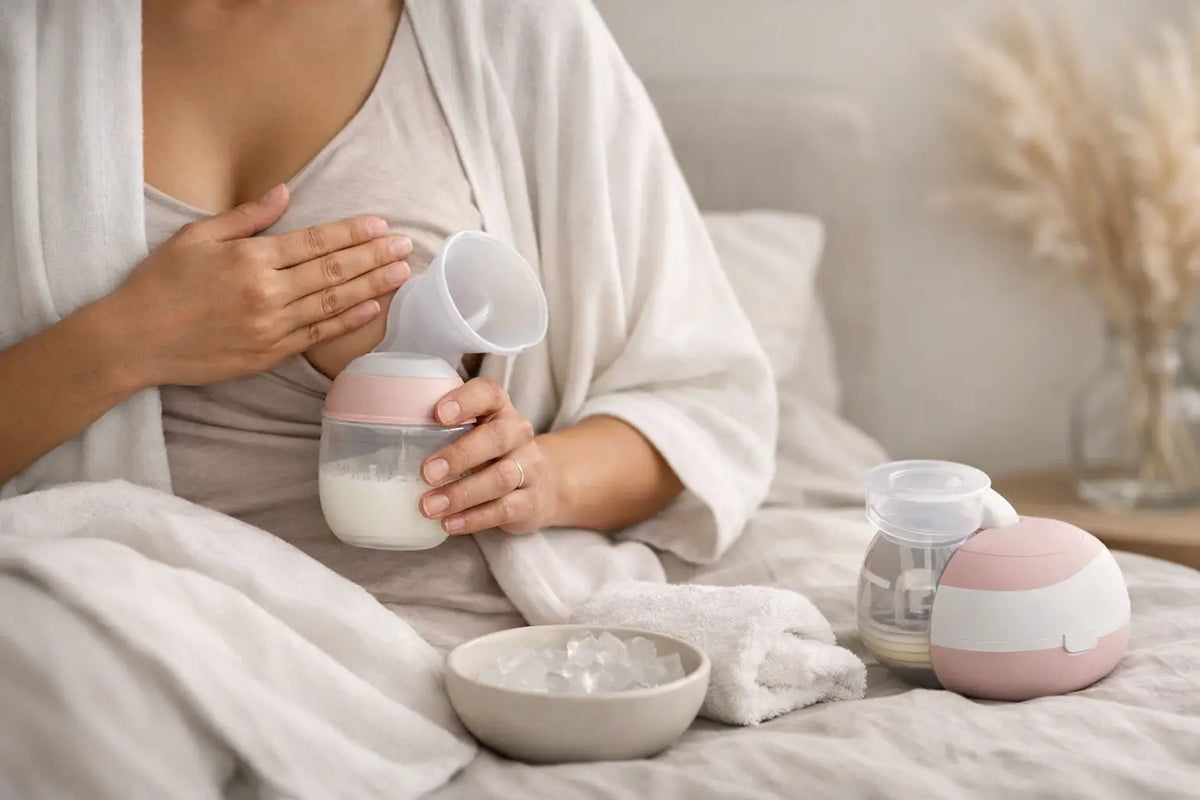
If pumping is needed, keep it purposeful. A portable double electric pump can be useful when you need relief, are separated from your baby, or need to maintain your milk removal routine. Use a comfortable setting and a correctly fitted flange. High suction is not a shortcut to better results and can leave already sensitive tissue more sore. Pump only enough to feel comfortable or to meet the milk removal needs you have been advised to follow.
After feeding or pumping, cold can be wonderfully calming. Cooling pads or cold therapy pads placed over the breast for short periods may reduce swelling and ease discomfort. Keep a soft cloth between an icy pack and your skin, and avoid prolonged direct cold exposure.
A little warmth can help immediately before feeding or pumping if milk is slow to release. A warm shower or briefly warmed therapy pad may feel soothing. The trade-off is that too much heat, especially for too long, can worsen swelling for some mothers. Keep warmth brief, then switch to cooling afterward if you are still puffy or sore.
Small comfort choices make a real difference
When your breasts are engorged, pressure from clothing can feel unbearable. Choose a supportive but nonrestrictive nursing bra and avoid anything that digs into the breast tissue. Change damp nursing pads promptly so the skin stays comfortable and dry. If leaking is part of the picture, soft reusable bamboo nursing pads can offer breathable protection without adding unnecessary irritation.
Gentle breast massage may help, but strong kneading is not the answer. Use light strokes from the chest wall toward the nipple before or during milk removal, then stop if it increases pain. Your breasts have been doing extraordinary work. They need tenderness, not force.
Rest and hydration matter too, even if they do not make engorgement disappear on their own. Drink to thirst, eat regularly, and let support people handle what they can. You do not need to restrict fluids to reduce milk supply. Dehydration only makes a demanding postpartum day harder.
What not to do when you are painfully full
It is understandable to want instant relief, but a few common strategies can make the cycle more difficult. Avoid routinely pumping large volumes simply because your breasts feel full. Consistently removing extra milk can encourage your body to produce more, leaving you even more uncomfortable later.
Avoid tight binding, aggressive massage, and prolonged heat. These can increase inflammation or create more tenderness. Also be cautious with advice that asks you to suddenly space out feeds or drastically reduce milk removal without personalized guidance. The right plan depends on your baby’s age, feeding pattern, your supply, and whether you are managing an oversupply concern.
Pain medication may be appropriate for some mothers, but your postpartum medical history matters. Ask your obstetric provider, primary care clinician, or lactation professional which options are safe for you, especially if you have a health condition or take regular medication.
When engorgement may need professional care
Engorgement should usually begin to improve with frequent, comfortable milk removal and cooling. Reach out to a lactation consultant or healthcare professional if pain is worsening, your baby cannot latch despite support, or the fullness keeps returning in a way that feels unmanageable.
Contact a healthcare provider promptly if you have a fever of 100.4°F (38°C) or higher, chills, flu-like symptoms, a painful wedge-shaped area of redness, pus or unusual discharge, or symptoms that are not improving within 24 hours. These signs can point to inflammation or infection that needs individualized assessment. Seek urgent care for severe illness, rapidly spreading redness, chest pain, trouble breathing, or any symptom that makes you feel seriously unwell.
Early support can prevent a difficult day from becoming a harder week. A skilled lactation consultant can assess latch, positioning, pump flange fit, milk removal patterns, and whether oversupply is contributing to repeated engorgement. This is especially valuable if you are feeling anxious or starting to dread feeds. You deserve care that looks at the whole picture, not just one painful symptom.
Building a calmer routine after the swelling settles
Once the immediate pressure eases, aim for consistency rather than perfection. Keep milk removal aligned with your baby’s needs, use your pump as a supportive tool rather than an emergency response to every sensation of fullness, and make comfort part of your daily setup. Having cooling therapy, well-fitting flange inserts, and leak protection ready can make a tender moment feel much more manageable.
At Noora Motherhood, we believe practical tools and expert reassurance belong together. Engorgement can feel overwhelming in the moment, but it is often temporary, treatable, and easier to navigate with the right support around you.
Be gentle with yourself as your body adjusts. A few minutes of comfort, a softer latch, or asking for help early can change the shape of your day. You are doing amazing, mama.


