

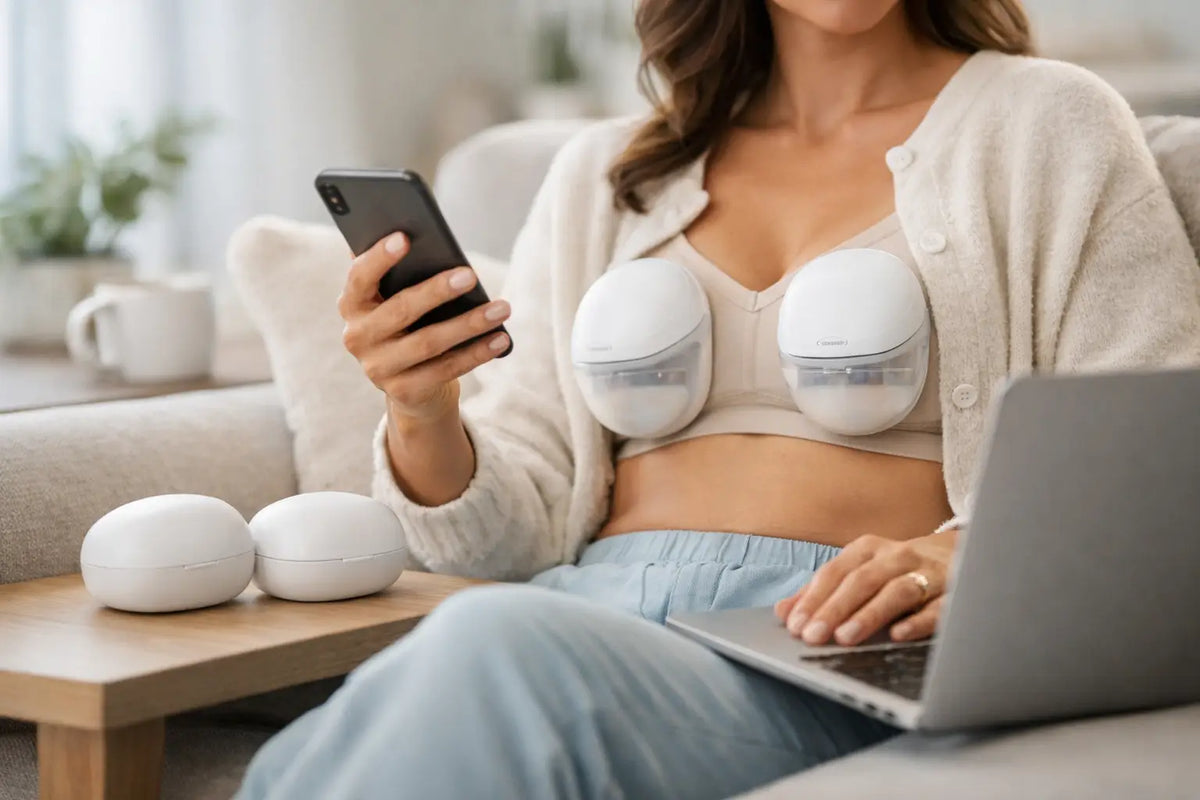
The moment you need two hands is often the moment a pumping session begins: answering a message, eating a warm meal, holding your little one close, or simply taking a breath. This guide to hands free pumping is here to help you create more ease without asking your body to work harder. Hands-free pumping can be a beautiful practical support, but comfort, fit, and a realistic routine matter more than doing everything at once.
What hands-free pumping really means
Hands-free pumping means your pump is supported securely, usually by a pumping bra or a structured nursing bra designed to hold pump flanges in place. Rather than sitting still and holding the pump parts throughout the session, you can keep your hands available for gentle tasks, rest, or connection.
It does not mean you need to be constantly productive. A hands-free session can be used to drink water, adjust your posture, read, or simply sit quietly. For many mothers, that freedom is the real benefit: a little more choice in a season where time and energy can feel very limited.
Portable double electric pumps can make this setup especially useful. Pumping both sides at once may reduce the time you spend connected to the pump, while a compact design can make it easier to settle into the space that feels best for you. Still, portability is only helpful when the fit is comfortable and the suction feels right.
A guide to hands free pumping: begin with a secure fit
The most important part of hands-free pumping is not the bra or the pump setting. It is flange fit. A flange that is too large, too small, or poorly centered can cause rubbing, pulling, swelling, and inefficient milk removal. If pumping hurts, feels pinchy, or leaves you with persistent soreness, do not assume discomfort is simply part of the process.
Your nipple should move freely in the tunnel with minimal rubbing against the sides. A small amount of areola may draw in, but excessive pulling can be a sign that a different size may suit you better. Nipple size can also change during the postpartum period, so a flange insert that worked early on may need reassessment later.
Before you begin, sit upright with your shoulders relaxed and center each flange carefully. Use a bra that holds the flanges firmly enough to prevent slipping but not so tightly that it presses heavily on breast tissue. If the bra shifts when you move, your seal may break and suction may feel inconsistent.
A few minutes spent adjusting at the start can save you from an uncomfortable session. This is one area where expert lactation guidance can make a meaningful difference, especially if you are unsure which insert or flange size to try.
Choose settings that feel effective, not intense
Higher suction is not automatically better. Many mothers increase suction hoping to express more milk, only to find that their body tenses, output slows, or their nipples become tender. The most helpful setting is generally the highest level that remains comfortable for you.
Start gently and give your body time to respond. Once milk begins to flow, adjust gradually if needed, always paying attention to how your breasts and nipples feel. A comfortable rhythm often supports better letdown than a setting that makes you brace yourself.
Output can vary from one session to the next. It may shift with sleep, stress, hydration, recovery, the time of day, and how recently you last breastfed or pumped. Try not to judge a session by a single number. Looking for broader patterns over several days is usually more useful and much kinder to yourself.
Build a routine around your actual life
The best hands-free pumping routine is one you can repeat without feeling overwhelmed. Some mothers prefer to pump after a feeding, while others find a separate window works better. There is no universal schedule that fits every body, every supply goal, or every family rhythm.
If you are newly postpartum, begin with short, calm sessions and focus on learning what feels comfortable. If you are pumping regularly to support your milk supply, consistency is often more valuable than chasing perfect timing. Your lactation consultant can help you decide how often and how long to pump based on your personal situation.
Prepare a small pumping space where you spend time anyway. Keep your pump, clean parts, breast pads, a water bottle, and a light snack within reach. If your nipples feel tender after pumping, cooling pads or silver nipple covers may offer welcome comfort between sessions. Warm and cold therapy pads can also be useful depending on whether you need gentle warmth before pumping or soothing coolness afterward.
This is not about creating a flawless routine. It is about removing a few avoidable obstacles so pumping feels less like an interruption and more like a supported part of your day.
Move gently while you pump
A secure hands-free setup can allow light movement, such as walking slowly around one room, preparing a simple snack, or sitting beside your little one. But it is wise to stay cautious. Sudden bending, lifting, or quick movements can shift the flanges and affect suction.
In the first few sessions, stay seated and see how your setup feels. Check that the flanges remain centered and that tubing, if your pump uses it, is not pulling. Once you feel confident, add small movements one at a time.
Avoid treating hands-free pumping as an invitation to take on every household task. Your postpartum body deserves rest. If having free hands helps you eat, relax your jaw, or place a hand over your heart and breathe deeply, it is already doing exactly what it should.
Protect comfort between sessions
Pumping should not leave you feeling damaged. After each session, take a moment to look for redness, blisters, swelling, or areas of persistent pain. Check that your nipples are not compressed or misshapen after removing the flanges. These signs can point to a fit or setting that needs adjustment.
Gentle nipple care matters, particularly in the early weeks. Soft reusable bamboo nursing pads can help manage leaks while keeping the skin feeling more comfortable. If you use nipple shields or other breastfeeding accessories, seek individual guidance on how they fit into your wider feeding plan.
Clean and dry pump parts according to the manufacturer’s instructions after each use, and replace worn components when suction begins to feel weaker. A pump may be working perfectly, yet a loose valve, tired membrane, or incomplete seal can affect performance.
If you develop fever, flu-like symptoms, a hot or painful area of the breast, cracked skin that is not improving, or pain that persists despite adjustments, contact a qualified healthcare professional or lactation consultant promptly. You deserve attentive care, not guesswork.
Make hands-free pumping feel like support
There can be pressure to make pumping look effortless. The truth is that there is a learning curve, and even an excellent setup may need small adjustments as your body and daily needs change. A comfortable flange, a well-fitted bra, and a quiet five-minute reset can be more valuable than any complicated routine.
At Noora Motherhood, we believe practical tools should feel like care in your hands. Whether you are pumping occasionally or building it into your regular rhythm, let comfort lead the way. You are doing amazing, mama. A hands-free session does not need to make you busier - it can simply give you a little more room to be cared for, too.


