That warm, spreading feeling on your top can make even a calm outing feel suddenly urgent. Milk leaks are common, especially in the early weeks when your body is learning your baby’s feeding rhythm. Knowing how to prevent milk leaks is less about controlling every drop and more about giving your body gentle, practical support.
You are not doing anything wrong if you leak. A let-down can happen when you hear a baby cry, think about feeding, feel emotional, or simply go a little longer than usual between feeds. With a few thoughtful habits and comfortable essentials, you can protect your clothes, care for your skin, and move through the day with more confidence.
Why milk leaks happen
Your breasts make milk in response to milk removal and hormonal changes. In the first months, supply can feel especially enthusiastic while your body adjusts to what your baby needs. Milk may leak from one breast while your baby feeds from the other, between feeds, overnight, or when your breasts feel very full.
Some mothers leak often; others barely leak at all. Neither pattern tells you how much milk you make or how well feeding is going. Leaking usually settles as supply regulates, though it can continue longer for some mothers. The goal is comfort and preparation, not pressure to make it disappear immediately.
How to prevent milk leaks with a comfortable routine
Change nursing pads before they feel soaked
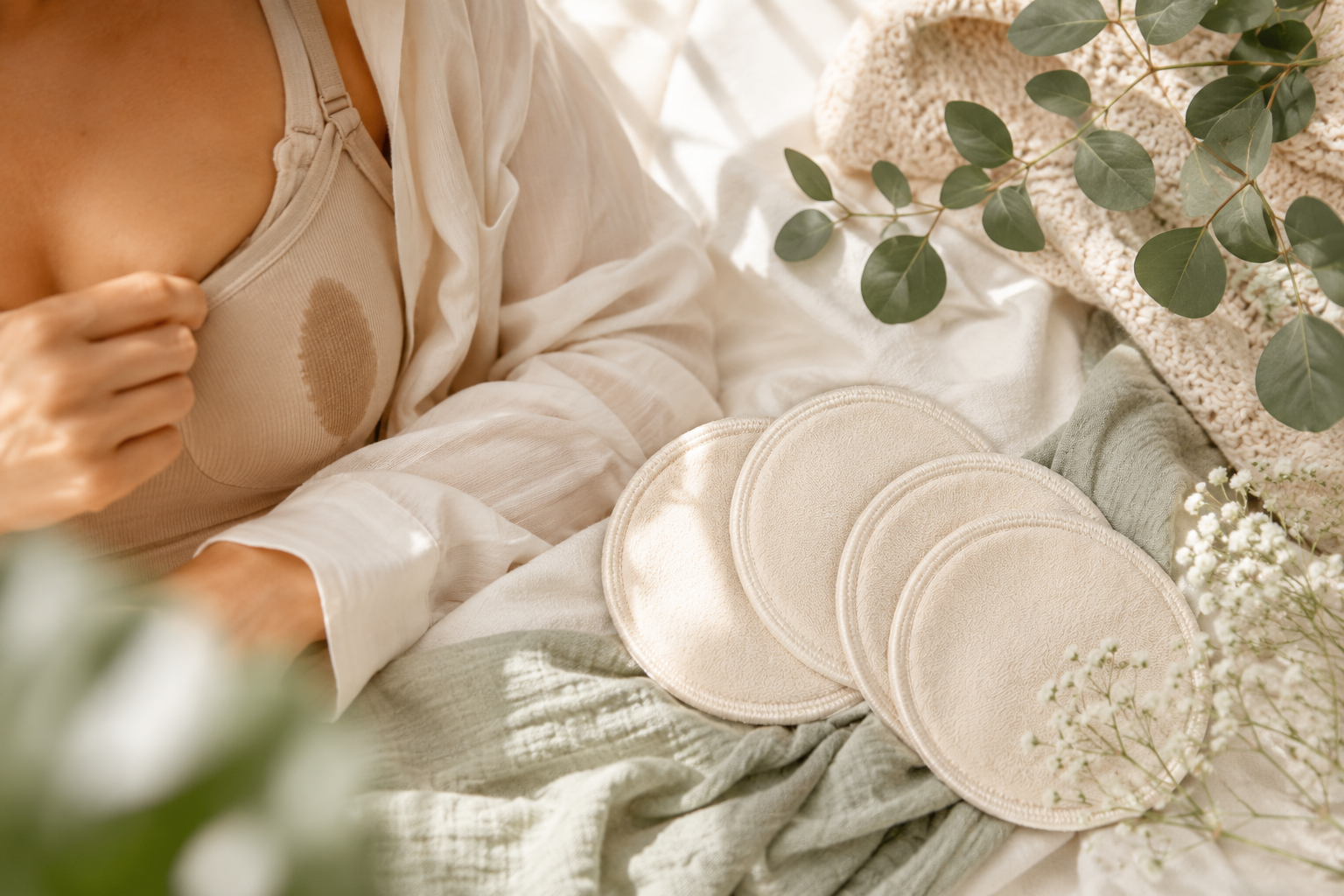
Reusable bamboo nursing pads can create a soft, breathable barrier between your skin and clothing. Choose pads that sit smoothly inside your bra without bunching, and keep an extra pair in your bag. Changing them promptly matters more than finding the most absorbent option available.
Damp pads against the nipple for long periods can leave skin tender, itchy, or irritated. If you are prone to sensitivity, look for soft, washable materials and avoid heavily fragranced products. At home, giving your breasts a few minutes of air after feeding can also feel wonderfully restorative.
Wear a supportive, non-restrictive bra
A well-fitting nursing bra helps nursing pads stay in place and gives your breasts gentle support. It should not dig into the breast tissue, leave deep marks, or feel painfully tight when your breasts become fuller. Compression may seem like a quick solution to leaking, but overly tight garments can be uncomfortable and may contribute to blocked ducts in some mothers.
At night, some mothers prefer a light sleep bra with nursing pads, while others are more comfortable without one. It depends on your leak level and what helps you rest. Place a clean towel under your fitted sheet if nighttime leaks are frequent, so you can simply switch it out rather than remake the bed at 3 a.m.
Collect milk from the opposite side during feeds
If you regularly leak from the breast your baby is not feeding from, a wearable milk collector can help catch those drops rather than let them soak into a pad. This can be especially useful in the early postpartum weeks, when let-downs can be strong and unpredictable.
Use a collector for comfort and collection, not as a reason to add extra suction unless a lactation professional has advised it. Consistently removing more milk than your baby needs can increase production for some mothers, which may lead to more fullness and more leaking. A gentle, passive collector is often enough.
Keep your feeding and pumping pattern steady
Long gaps can leave breasts uncomfortably full and more likely to leak. When possible, respond to your baby’s feeding cues and keep pumping sessions aligned with the plan that works for your body and family. A portable double electric breast pump can make it easier to maintain your routine when you are returning to work, traveling, or spending a long day away from home.
Still, more pumping is not automatically better. If you are pumping because of oversupply, engorgement, or persistent leaking, individualized guidance is valuable. Your ideal schedule depends on your postpartum stage, your baby’s feeding needs, and whether you are building, maintaining, or reducing milk supply.
Prepare for triggers instead of avoiding life
Many mothers notice leakage when they hear a baby cry, during a phone call about their little one, or just before a usual feeding time. These natural let-down triggers are not something you need to fear. Keep pads and a spare top nearby, and discreetly apply light pressure over your bra with your hand if you feel a let-down beginning.
For some mothers, standing under a warm shower or using heat before a feed can also trigger milk flow. If that is your experience, wear nursing pads afterward and have a towel ready. Heat can be soothing before milk removal when you feel tense, while cool therapy pads may feel better afterward if your breasts are swollen or achy.
Build a small leak-prevention kit
You do not need to carry an entire nursery bag to feel prepared. A few carefully chosen items can make a meaningful difference when you are out for an appointment, visiting family, or heading back to work.
Keep four essentials together: two sets of clean nursing pads, a spare breathable top, a small waterproof pouch for used reusable pads, and a gentle milk collector if you commonly leak during feeds. Add nipple care items if you need them, especially in the early weeks when feeding can leave skin sensitive.
Dark colors and patterned fabrics can offer peace of mind on days when you are still learning your leak pattern, but you deserve to wear what makes you feel like yourself. The right protection lets you choose your clothing based on comfort and personal style, not anxiety.
Care for the skin beneath the leak
Milk itself is not harmful to skin, but constant moisture can soften the nipple and surrounding area, making it more vulnerable to friction and irritation. Change damp pads, let the area air-dry when you can, and choose a bra that does not rub.
If your nipples feel sore, cracked, or unusually sensitive, address the cause rather than simply covering it. Positioning, latch, pump flange fit, and pump settings can all affect nipple comfort. Flange inserts can help create a more personalized fit when a standard flange size feels too tight, pulls in too much tissue, or causes rubbing.
Silver nipple covers may provide a protective barrier between feeds for mothers who are dealing with tenderness. They should be kept clean and used according to product guidance. Persistent pain is not a breastfeeding rite of passage, mama. It is a reason to reach out for skilled support.
When leaking may need expert attention
Most milk leakage is normal. However, contact a healthcare provider or lactation consultant if you have fever, chills, a painful red or hot area on the breast, worsening swelling, or flu-like symptoms. These can be signs that need prompt assessment.
Also seek support if leaking comes with frequent painful engorgement, recurring blocked ducts, nipple damage, or a supply that feels difficult to manage. A lactation consultant can look at the full picture: feeding frequency, comfort, breast changes, pump fit, and the practical demands of your day. Small adjustments often bring significant relief.
At Noora Motherhood, we believe every drop counts, but so does your comfort. Leaks may be part of your breastfeeding season, not a measure of your success. Give yourself permission to prepare gently, change what feels uncomfortable, and ask for care when you need it. You are doing amazing, mama.


