

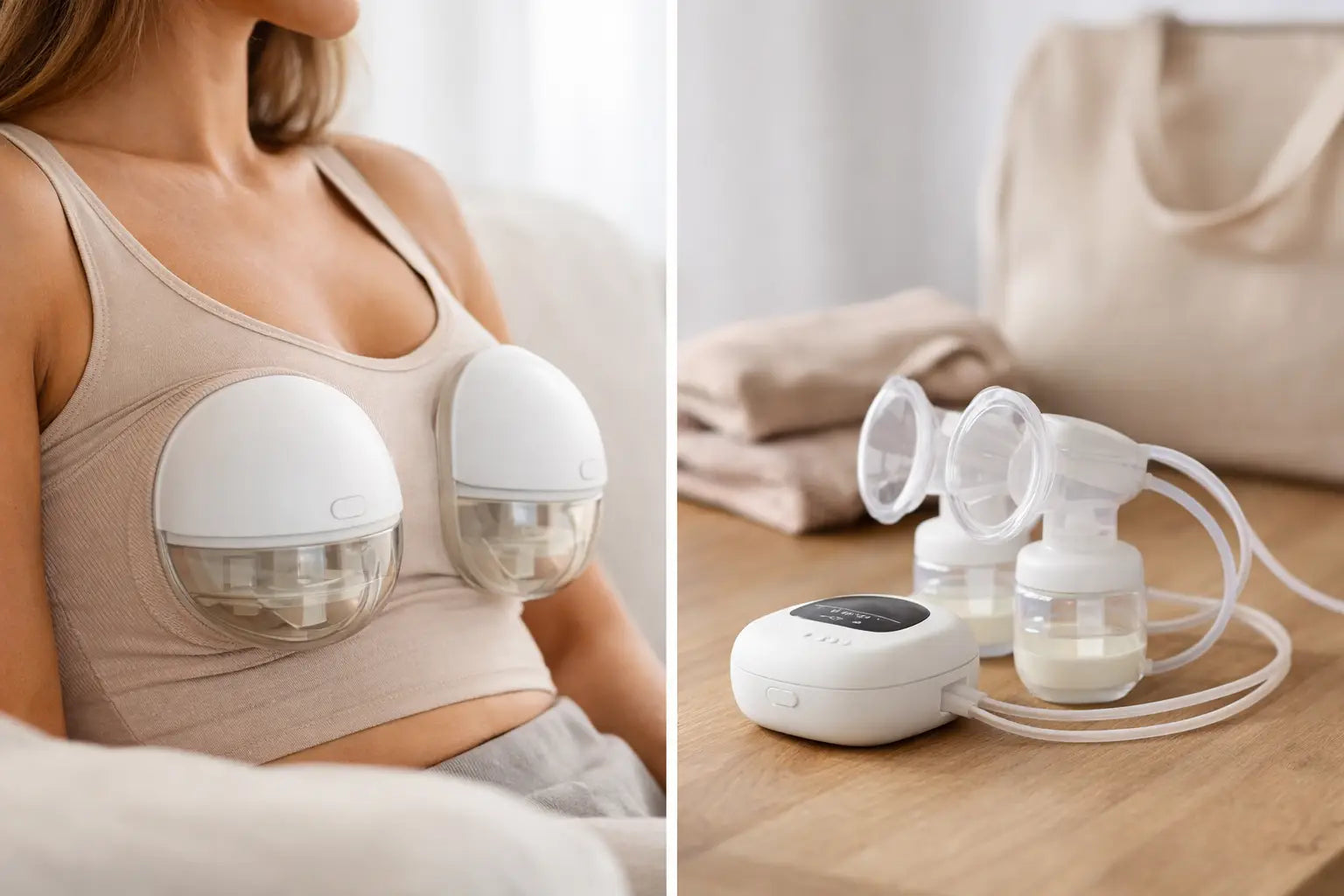
The decision often arrives in a very real moment: you are preparing to return to work, planning a long appointment, or simply hoping to move through the day with a little more freedom. When comparing a wearable pump vs portable pump, the best choice is not necessarily the smallest or most popular one. It is the one that supports your body, your milk-removal needs, and the rhythm of your life without adding stress to an already full season.
You are doing amazing, mama. A pump is a tool, not a measure of your dedication or your breastfeeding journey. Understanding the practical differences can help you choose with more confidence.
Wearable Pump vs Portable Pump: The Main Difference
A wearable pump is designed to sit entirely inside your bra. Its motor, collection cup, and pumping parts are combined into a compact unit, with no external tubing or separate motor to carry. Many mothers choose this style for the freedom of moving around while pumping and for its discreet appearance under loose clothing.
A portable pump usually has a small, separate motor that connects to breast shields and collection containers through tubing. It is still made for life beyond the couch or a dedicated pumping corner, but the motor can be clipped to clothing, placed in a pocket, or set nearby. A portable pump may be used with a pumping bra to give you hands-free support while you work, eat, or care for your home.
Both options can make pumping feel more manageable. The right fit comes down to what you need most: total freedom from tubing, a more adjustable pumping experience, dependable sessions at work, or a balance of all three.
Why Some Mothers Prefer a Wearable Pump
The biggest advantage of a wearable pump is its all-in-one design. With no separate motor to carry, it can feel less noticeable when you need to pump while handling everyday tasks. For mothers with an active routine, that feeling of mobility can be deeply reassuring.
Wearables can be especially helpful for occasional sessions away from home, quick milk removal between commitments, or days when you need to remain on your feet. The cups are self-contained, which may make the setup feel simple once you are comfortable assembling and positioning them.
There are trade-offs, however. Because wearable pumps sit within the bra, they can feel heavier or bulkier than expected. Proper positioning matters greatly. A cup that shifts, presses too firmly, or does not align well with the nipple can affect comfort and how effectively milk is removed.
Wearable pumps also tend to have more compact parts, which can require careful cleaning. If you are pumping multiple times a day, consider whether you have the time, water access, and spare parts needed to keep every session hygienic and practical. Discretion is valuable, but comfort and effective milk removal should remain the priority.
When a Portable Pump May Be a Better Match
A portable pump gives you mobility while keeping the motor outside the bra. This can offer a more familiar pumping setup for mothers who prefer breast shields that are easier to see and adjust during a session. It can also feel less weighty on the chest, particularly during longer pumping sessions.
Many mothers appreciate the control that comes with a portable double electric pump. Depending on the model, you may have clearer access to settings and an easier view of placement. If pumping is a regular part of your workday or your plan for maintaining supply, that visibility can make a meaningful difference.
A compact portable option, such as the Noora MightyMini, can support pumping beyond home without making the experience feel overly complicated. Paired with a supportive pumping bra, a portable pump can still allow you to use your hands for a laptop, a meal, or a quiet moment to yourself.
The compromise is that you will have tubing and a separate motor to manage. For some mothers, that is a small price for a setup that feels more stable and easier to monitor. For others, especially those pumping in public spaces or moving constantly between tasks, a fully wearable design may feel more convenient.
Comfort and Fit Matter More Than Style
It is tempting to choose based on how discreet a pump looks. But the most beautiful, compact pump will not serve you well if it causes rubbing, pinching, or poor milk removal. Whether you choose wearable or portable, the breast shield flange must fit your body well.
A flange that is too large may pull in more breast tissue than necessary and can cause discomfort. One that is too small may create friction, restrict nipple movement, and make pumping feel painful. Fit can also change over time, particularly in the early weeks after birth, so it is worth checking in rather than assuming one size will always work.
Pay attention to how you feel during and after a session. Some tenderness can happen, especially when you are still learning, but persistent pain, damaged skin, or a sudden change in milk output deserves support. Flange inserts can help create a more personalized fit, and a lactation consultant can guide you through adjustments that are difficult to assess alone.
Because every drop counts, effective pumping is not about chasing a certain amount in one session. Milk output can vary by time of day, stress level, recent feeding, hydration, and your individual body. Your comfort, consistency, and overall feeding goals tell a more useful story than comparing your experience to someone else’s.
Consider Your Real Daily Routine
The most helpful way to decide between a wearable pump and a portable pump is to picture an ordinary day, not an ideal one. Think about where you will pump, how often you expect to pump, and what support you will have around you.
If you need to move freely through errands, household tasks, or a busy workplace, a wearable pump may offer the simplicity you are looking for. It can be a thoughtful second pump for on-the-go sessions, even if you use another pump as your primary option at home.
If you want a setup that feels easier to position, observe, and fine-tune, a portable pump may be the more reassuring choice. It can also be a strong option for mothers who plan to pump frequently and want a compact unit without placing all of the pump’s weight inside their bra.
Cleaning should be part of the decision too. Consider the number of parts, how easily they can be rinsed and dried, and whether your day gives you the space to manage them. A pump that fits your care routine is more likely to be used comfortably and consistently.
Give Yourself Permission to Adjust
Your first pump does not have to be your forever answer. Some mothers find that a portable pump is their dependable daily companion, while a wearable option is useful for specific moments. Others prefer one simple system that feels familiar every time. There is no single correct setup.
If pumping feels uncomfortable, overwhelming, or less effective than you expected, pause before blaming yourself. Check the flange fit, positioning, settings, and timing, then seek lactation-backed guidance when you need it. The right support can turn a frustrating session into one that feels calm, capable, and more like your own.
Choose the pump that gives you room to breathe, move, and care for yourself along the way. Your breastfeeding journey deserves tools that meet you with comfort, not pressure.


