

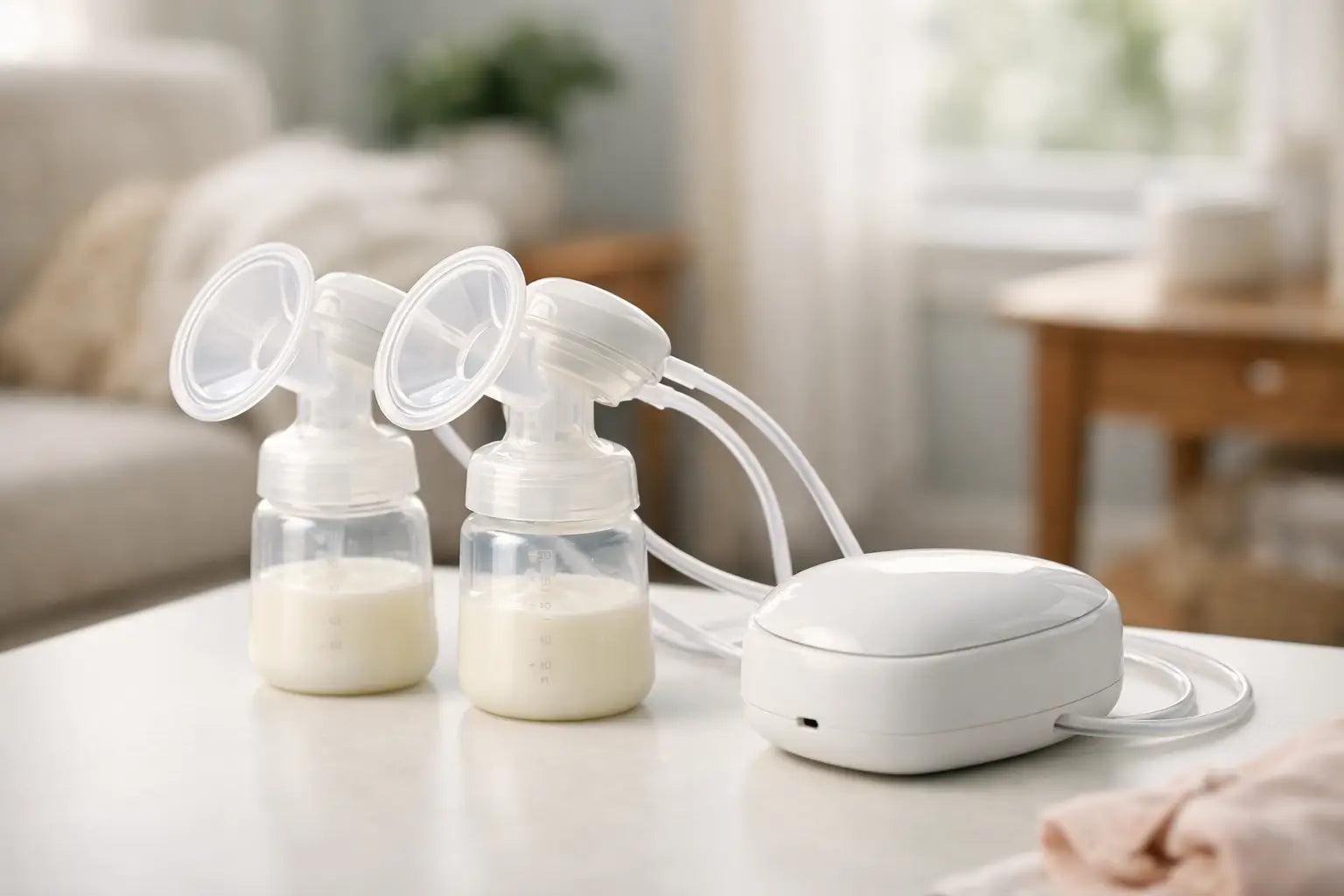
3:12 a.m., one hand on your pumping bra, the other checking the clock - this is usually when the question gets very real. If you are pumping often, a double breast pump can feel less like a nice extra and more like a practical form of relief. For many mothers, it shortens sessions, supports consistency, and makes the daily rhythm of feeding and pumping a little more manageable.
That said, not every mother needs the same setup. The best choice depends on how often you pump, where you pump, how sensitive your breasts are, and how much flexibility your day allows. You are doing amazing, mama, and the right pump should make this season feel more supported - not more complicated.
What a double breast pump actually does
A double breast pump expresses milk from both breasts at the same time. That sounds simple, but the impact can be significant when you are trying to protect your time, keep up with regular sessions, or avoid stretching one pumping session into a long interruption.
For mothers who pump multiple times a day, pumping both sides together often means less time attached to the pump overall. It can also help some mothers maintain a more reliable routine, simply because the process feels easier to fit into real life. When something saves even ten or fifteen minutes per session, that difference adds up quickly across a week.
There is also the mental side of it. Pumping can already feel demanding. A setup that feels efficient, comfortable, and easy to repeat often makes it more realistic to stay consistent, especially during the early postpartum weeks or when returning to work.
When a double breast pump makes the biggest difference
A double breast pump tends to be most helpful when pumping is a regular part of your feeding plan, not just an occasional backup. If you are building a freezer supply, managing time away from your baby, supporting your supply with frequent sessions, or balancing breastfeeding with work, double pumping often gives you more breathing room.
It can also be a smart choice for mothers who find pumping emotionally tiring. When each session feels shorter and more efficient, the task may feel less overwhelming. That matters. Practical comfort is not a luxury in postpartum care - it is part of what helps mothers continue.
Still, there are trade-offs. Some mothers pump only once in a while and may not need a double setup. Others prefer something very minimal at first and upgrade later once their routine becomes clearer. There is no prize for choosing the most advanced option if your actual needs are simpler.
Double breast pump vs single pump
The biggest difference is time, but time is not the only factor. A single pump can work well for occasional pumping or for mothers who are easing into the process. It may also feel less overwhelming if you are still learning what flange size, suction level, and pumping rhythm feel best on your body.
A double breast pump, on the other hand, is usually the better fit when efficiency matters every day. If you are pumping before work, between meetings, during travel, or while managing other children at home, cutting session time can be a major benefit. Many mothers also find that pumping both breasts together helps the process feel more structured and worth the effort.
The question is not which type is universally better. It is which one matches your season of motherhood. Your routine, comfort level, and goals matter more than trends.
What to look for in a double breast pump
Comfort should come first. A pump can have sleek design and convenient features, but if the flange fit is wrong or the suction feels too harsh, you are not going to want to use it regularly. This is where many mothers get frustrated. They assume pumping is supposed to hurt, when in reality the setup often needs adjusting.
Flange sizing matters more than most people expect. The right fit can make a noticeable difference in comfort and output, while the wrong fit can lead to rubbing, swelling, and sessions that feel discouraging. If a pump offers insert options or sizing support, that is genuinely useful, not a minor detail.
Portability is another big one. If you picture yourself pumping only in one quiet corner of the house, a larger setup may feel fine. But many mothers need to move through real life while pumping - answering the door, making a snack, sitting in the car before an appointment, or working at a desk. In those cases, a lightweight and discreet design can change how often the pump actually gets used.
Noise level matters too, especially for mothers who want privacy or plan to pump around sleeping family members. And battery life is worth checking if you need freedom from outlets. A pump that works beautifully in theory but adds stress outside the home may not be the right fit in practice.
Comfort is not a bonus - it is part of performance
Many pumping conversations focus only on speed or output, but comfort deserves equal attention. When a pump feels gentler and more wearable, mothers are often more willing to stay consistent with sessions. Consistency is where many breastfeeding goals are either supported or strained.
This is also why accessories matter. Flange inserts, soothing therapy pads, nursing pads, and nipple care tools are not just add-ons for the shopping cart. They can be part of a smarter pumping system that supports your body before, during, and after expression. Thoughtful care around pumping often makes the experience feel more sustainable.
At Noora Motherhood, this is part of the philosophy - mothers need more than a device. They need comfort, clarity, and support that respects the physical reality of breastfeeding.
Common concerns about using a double breast pump
One common worry is whether a double pump will feel too intense. Not necessarily. A good pump should offer adjustable settings so you can find a level that feels effective without feeling harsh. Stronger is not always better. The goal is comfortable, regular milk expression, not pushing your body past its limit.
Another concern is whether wearable or portable styles are as effective as more traditional pumps. The answer depends on the mother. For some, portability dramatically improves consistency, which makes the pump more useful overall. For others, especially if they have very specific output goals or more complex feeding challenges, they may need a different setup or extra guidance.
Cleaning is another fair concern. If a pump has too many parts and feels annoying to wash, it may become harder to keep up with. Simplicity matters, especially in the newborn stage when mental load is already high.
How to know if you are choosing the right one
Ask yourself what your actual week looks like, not your ideal week. Are you pumping once every few days, or several times a day? Do you need something discreet for work or travel? Are you recovering from birth and craving the gentlest possible routine? Do you need support with fit and comfort, not just a machine that turns on?
These questions usually reveal the right direction. The best double breast pump is not the one with the longest feature list. It is the one you can use consistently, comfortably, and confidently.
If you are unsure, expert guidance can save you time, money, and frustration. A lactation-informed recommendation can help you look beyond marketing language and focus on what will serve your body and your feeding routine.
A better pumping experience starts with support
A double breast pump can be a wonderful tool, but the real goal is not just pumping more efficiently. It is feeling more supported in your day, more comfortable in your body, and more at ease with the rhythm you are building for yourself and your baby.
Some mothers need maximum portability. Others need softness, quiet, or help with fit. Some need all three. There is no single perfect answer, only the setup that meets you with care where you are right now. Because every drop counts, and so does the mother making it happen.


