

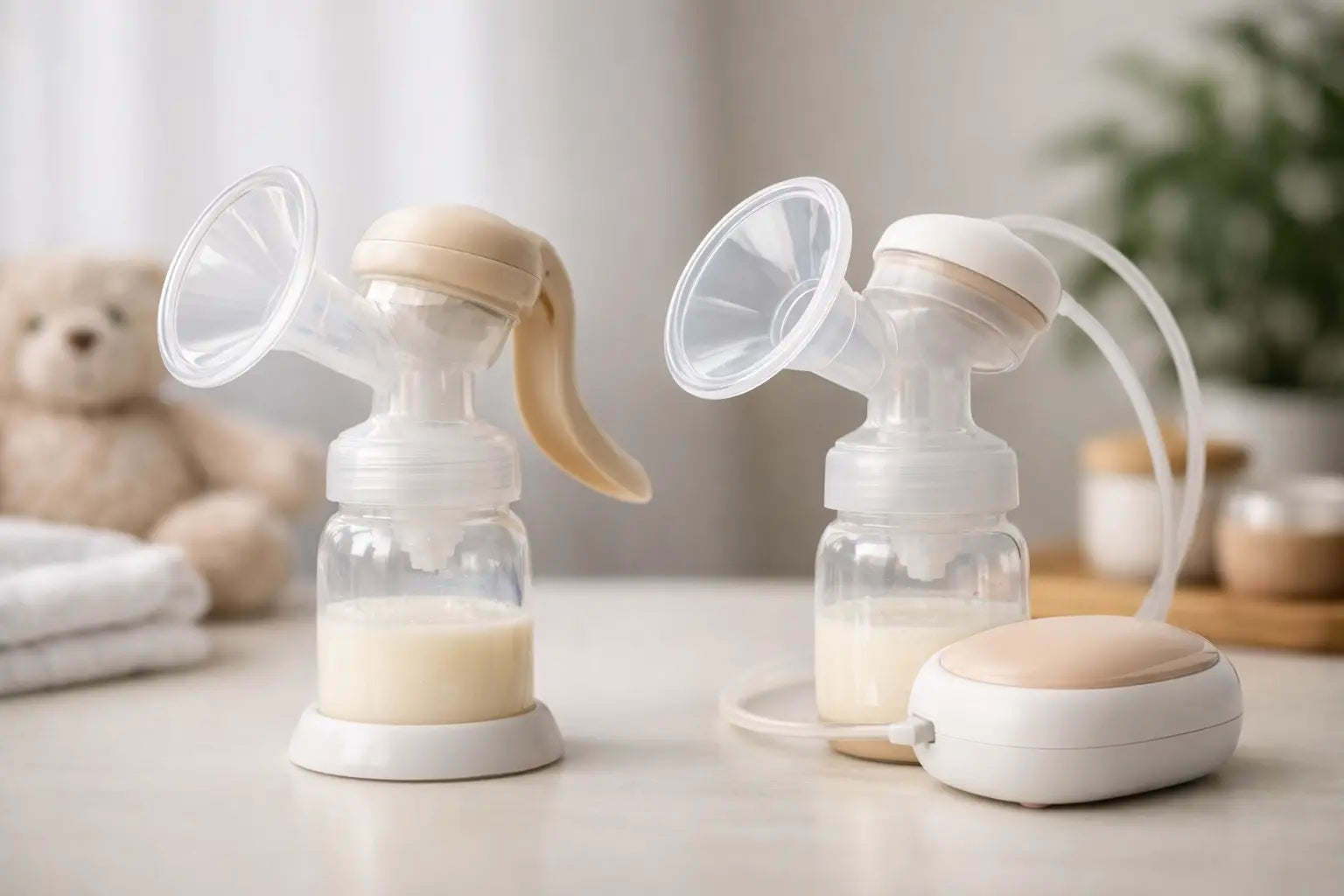
A manual vs electric breast pump decision can feel surprisingly big when you are already learning your baby, your body, and a new daily rhythm. The right answer is not about choosing the most advanced option. It is about choosing the support that feels comfortable, realistic, and kind to you in this season.
Some mothers love the quiet, simple control of a manual pump. Others need the efficiency of an electric pump to make pumping possible alongside work, recovery, caring for older children, or simply getting a few minutes to themselves. Both can have a meaningful place in your breastfeeding journey.
Manual vs Electric Breast Pump: The Core Difference
A manual breast pump is powered by your hand. You create suction by squeezing a handle, allowing you to adjust the pace and pressure moment by moment. It is usually compact, lightweight, and does not need charging or electricity.
An electric breast pump uses a motor to create a consistent pumping pattern. Many models offer adjustable settings, and double electric pumps can express milk from both breasts at the same time. This can reduce the time spent pumping and make regular sessions more manageable.
Neither option is automatically more comfortable or more effective for every mother. Milk expression is influenced by many things, including flange fit, your comfort level, how often you pump, your milk supply, and the way your body responds to the pump. A pump should support your routine, not make it feel harder.
When a Manual Pump Can Be the Right Choice
Manual pumps are often a lovely option for mothers who expect to pump occasionally. If you are mostly nursing directly and want a simple tool for moments of fullness, brief separations, or occasional milk collection, a manual pump may be all you need.
The biggest advantage is control. With your hand on the handle, you can slow down immediately if the suction feels too strong or pause whenever you need to reposition. Some mothers find this responsive, gentle approach especially reassuring in the early postpartum weeks, when everything can feel sensitive and unfamiliar.
A manual pump can also be useful as a dependable backup. There is no need to think about battery levels, charging cables, or finding an outlet. It can be easy to keep in your hospital bag, work bag, or travel pouch for unexpected moments.
There are trade-offs, of course. Pumping by hand can become tiring, especially during longer sessions or if you pump frequently. Because you generally express from one breast at a time, it may take more of your day. If your hands, wrists, or shoulders are sore from recovery or daily caregiving, repeated manual pumping may not feel sustainable.
When an Electric Pump May Offer More Support
An electric breast pump is often the more practical choice when pumping is a regular part of your day. Perhaps you are returning to work, building a milk supply under lactation guidance, managing a schedule that requires frequent pumping, or simply looking for a less hands-on routine.
With adjustable suction and rhythm settings, an electric pump can help you find a pattern that feels effective without asking your hands to do all the work. The goal is never to tolerate discomfort for the sake of speed. Start gently, then adjust only to a level that remains comfortable. Higher suction is not always better, and pain is a sign to pause and reassess.
A double electric pump can be especially helpful for mothers who need to pump often. Expressing from both breasts at once may save valuable time and can make a full routine feel less demanding. A portable option, such as the Noora MightyMini, can offer flexibility for mothers who want pumping support that fits around real life rather than keeping them tied to one place.
Electric pumps do require a little more planning. You will need to keep the device charged, clean the parts carefully, and feel comfortable with the settings. For many mothers, that preparation is worthwhile because the time and energy saved across the week can be significant.
Think About Your Real Schedule, Not an Ideal One
The most helpful question is not, “Which pump is best?” It is, “When will I realistically use it?”
If you expect to pump once in a while and value simplicity, a manual pump may feel like a calm, low-maintenance companion. If pumping will happen several times a week or several times a day, an electric pump may protect more of your time and physical energy.
Consider where pumping will happen, too. A mother working long shifts may need a portable electric pump with reliable battery life. A mother who is usually at home but wants a small backup for outings may appreciate a manual option. Some mothers choose both: an electric pump for their regular routine and a manual pump for flexibility when away from home.
There is no prize for choosing only one method. Your needs can change as your breastfeeding journey changes.
Comfort Depends on More Than the Pump Type
A high-quality pump matters, but the fit of the flange is just as important. A flange that is too large, too small, or poorly positioned can cause rubbing, swelling, pain, and less effective milk expression, whether the pump is manual or electric.
Before deciding that a pump is not working for you, check the fit. Your nipple should move freely in the tunnel without excessive friction, and the surrounding breast tissue should not be pulled in uncomfortably. Flange inserts can help create a more personalized fit when the standard size does not feel right.
Your body also deserves care before and after pumping. Warmth may help you feel more relaxed before a session, while cooling pads can bring comfort if you are tender afterward. If you have cracked skin, persistent pain, significant swelling, fever, or flu-like symptoms, seek prompt guidance from a qualified healthcare professional or lactation consultant. You do not need to push through pain alone.
Consider Cost With the Whole Journey in Mind
Manual pumps usually cost less upfront, which can make them a sensible choice for occasional use. Electric pumps are a larger investment, particularly double and portable models, but they can offer more convenience if pumping will be a frequent commitment.
It can help to think beyond the initial purchase. Ask yourself how much time you are likely to spend pumping each week, whether you need portability, and what would make the experience easier to continue. Accessories that improve comfort, such as properly sized flange inserts, reusable nursing pads, or soothing therapy pads, can matter just as much as the pump itself.
The best value is not always the lowest price. It is the option you can use comfortably and consistently, without adding unnecessary stress to your day.
A Gentle Way to Make Your Decision
Choose a manual pump if you want occasional support, quiet control, a compact backup, or a simple option that does not rely on power. Choose an electric pump if you will pump regularly, want to reduce hands-on effort, need more flexibility in your schedule, or would benefit from expressing from both breasts at once.
If you are still unsure, begin with your routine rather than product features. Picture the moments you expect to pump: early mornings, between meetings, during travel, or when you need a little breathing room. The right pump is the one that makes those moments feel more manageable.
You are doing amazing, mama. A pump is simply a tool in your care plan, and you deserve one that supports your body, your time, and your peace of mind. Because every drop counts, but so does how you feel along the way.


