

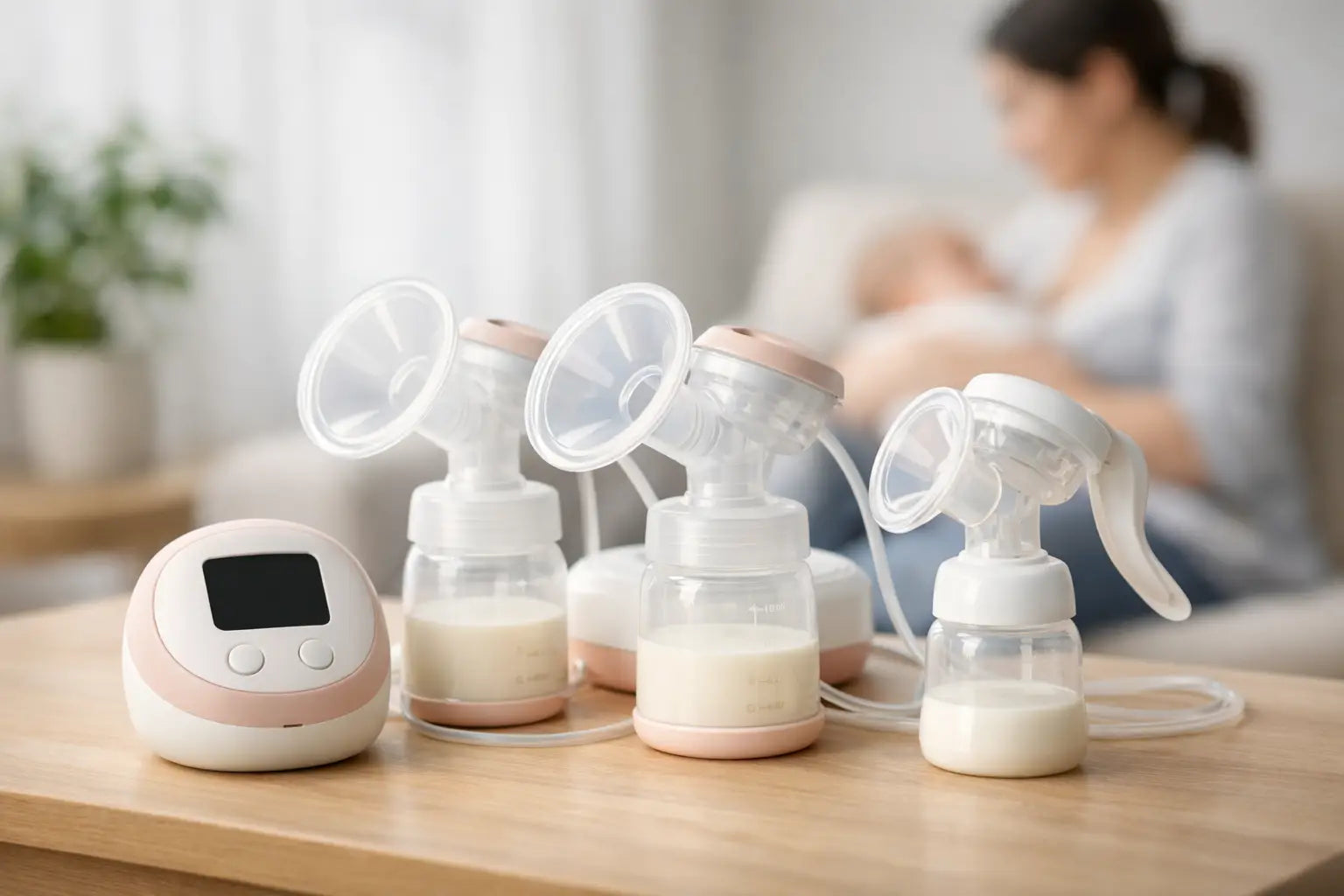
At 2 a.m., when your breasts feel full, your shirt is damp, and your baby has finally fallen asleep, breast pump shopping can feel strangely overwhelming. If you are wondering how to choose breast pump options without second-guessing every feature, start here: the best pump is not the one with the longest spec sheet. It is the one that fits your body, your feeding rhythm, and the kind of support you need in this season.
Many mothers are told to look for “the best” pump, as if one model works for everyone. In reality, pumping comfort and effectiveness are deeply personal. Your milk supply, nipple size, sensitivity, daily schedule, return-to-work plans, and even how much privacy you have at home all shape what will actually work for you. You are doing amazing, mama, and choosing well begins with giving yourself permission to choose what feels sustainable, not just what sounds impressive.
How to choose breast pump based on your routine
The first question is not electric or manual. It is, how often will you pump?
If you plan to pump occasionally, perhaps for relief, missed feeds, or the rare outing, a simpler setup may be enough. If you expect to pump daily, especially multiple times a day, a double electric pump usually makes far more sense. It can save time, reduce the mental load of longer sessions, and make your routine feel more manageable when you are already stretched.
Portability matters more than many mothers expect. A lightweight wearable or compact portable pump can be a genuine relief if you are moving around the house, caring for an older child, commuting, or trying to pump discreetly. On the other hand, some mothers prefer a more traditional pump at home if they value a larger motor or a setup they can leave in one place. There is no universal right answer here. The trade-off is often between freedom of movement and the feel of a more stationary system.
Noise is another practical detail that can shape your experience. If you will be pumping near a sleeping baby, at work, or during travel, a quieter pump can make a real difference. It is one of those features that sounds minor until you are using the pump every day.
Comfort is not a luxury
A pump should not feel punishing. Gentle but effective suction, soft contact points, and the right flange size matter just as much as power. In fact, stronger suction is not always better. Many mothers assume maximum suction will remove more milk, but too much intensity can cause discomfort, nipple trauma, and stress that makes pumping harder instead of easier.
A good pump should offer adjustable settings so you can find a rhythm that feels comfortable and effective for your body. That balance is where many mothers settle into more consistent pumping. If your body tenses every time you reach for the pump, it becomes harder to stay regular with sessions, and regularity matters.
The flange fit deserves special attention. This is one of the most overlooked reasons mothers struggle with pumping. A flange that is too large or too small can lead to pain, rubbing, swelling, reduced milk output, or the feeling that pumping simply does not work for you. Sometimes the pump is not the problem at all. The fit is.
This is also where expert support becomes valuable. A lactation consultant can help assess flange sizing, comfort, latch concerns, pumping frequency, and whether your setup is supporting your goals. That kind of guidance can save weeks of frustration.
What features actually matter
When mothers compare pumps, it is easy to get distracted by marketing language. Try to bring the focus back to daily use.
A double pump is often worth it if efficiency matters to you. Pumping both breasts at once can shorten sessions and help many mothers stay more consistent. Rechargeable battery life is another feature that matters in real life, especially if you do not want to be tied to an outlet.
If you are choosing between a wearable and a standard portable pump, think about your priorities. Wearables offer discretion and mobility, which can be invaluable during busy days. Standard portable pumps may feel easier to position for some mothers and can be simpler to monitor during a session. Neither is automatically better. It depends on whether your biggest need is hands-free convenience, visual control, or a little of both.
Ease of cleaning also deserves a place on your list. If a pump has many small parts, it may feel manageable at first and exhausting later. New motherhood asks enough of you already. A setup that is straightforward to assemble, clean, and use can make a big difference over time.
How to choose breast pump if you are a first-time mom
If this is your first baby, you may not yet know how your body responds to pumping. That is normal. In this case, flexibility is your friend.
Look for a pump with adjustable suction levels, comfortable flange options, and a design that feels intuitive rather than complicated. You do not need to become an expert on every technical detail before you buy. What you need is a pump that gives you room to learn what feels good, what supports your milk flow, and what fits naturally into your day.
It also helps to think ahead gently, without pressuring yourself. Will you likely pump once in a while, every workday, or during a season of mixed feeding at the breast and pumping? You do not need a perfect forecast, but a realistic sense of your probable routine will help you avoid overbuying or underbuying.
Many first-time mothers also benefit from a small ecosystem of support around the pump itself. Flange inserts for a better fit, soothing nipple care, reusable nursing pads, and milk collection tools can make pumping and breastfeeding feel less chaotic. Because every drop counts, the right accessories are not extras for many mothers. They are part of what makes the whole experience feel gentler.
If you are returning to work, think beyond the pump
For working mothers, time and discretion often matter as much as suction performance. A portable double electric pump can help you maintain your routine with less disruption, especially if you are pumping between meetings, in the car before heading home, or while managing a full day outside the house.
But the pump is only one piece. Ask yourself whether it will be easy to carry, whether the battery can last through your schedule, and whether you can comfortably wear or use it in the spaces available to you. A pump that is technically excellent but awkward for your workday may end up unused.
This is also where comfort protects consistency. If pumping at work feels stressful, inconvenient, or physically uncomfortable, sessions are easier to skip. Over time, that can affect your supply and your confidence. Choosing a pump that respects your routine is not selfish. It is practical care.
Red flags to watch for
If you are comparing options, be cautious of choosing based only on price or popularity. A lower-priced pump that hurts, leaks, or feels cumbersome can cost you more in stress. A highly praised pump may still be wrong for your anatomy or routine.
Watch for limited sizing options, unclear instructions, weak customer support, or designs that seem difficult to clean. If a brand talks only about power and not about comfort, fit, or maternal experience, that tells you something.
The best breast pump choice usually sits at the intersection of performance, comfort, and support. That support may come through clear education, thoughtful accessories, or access to lactation-informed guidance. At Noora Motherhood, that is the heart of the approach: mothers deserve products that work, and care that helps them feel held while using them.
A breast pump should make your feeding journey feel more supported, not more complicated. Choose the one that fits your real life, trust your body as you learn, and remember that needing comfort, ease, and reassurance is not asking for too much. It is wise mothering.


