

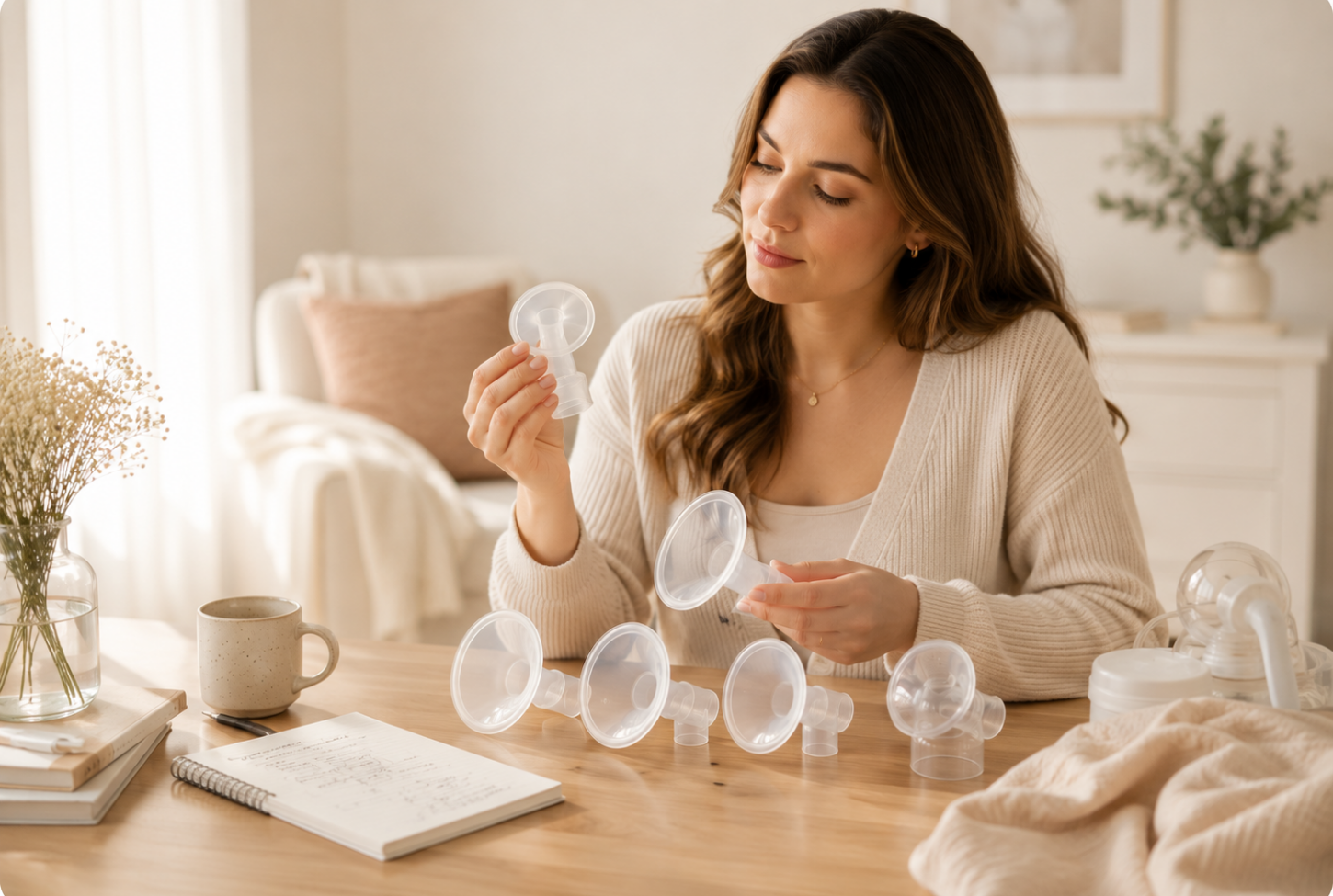
A pumping session should not leave you wincing, rubbing sore nipples, or wondering why so little milk came out. One of the most common reasons pumping feels uncomfortable or ineffective is a flange that simply does not fit well. If you are trying to figure out how to choose breast pump flange size, the good news is that small adjustments can make a very real difference in comfort, milk flow, and your overall pumping experience.
You are doing amazing, mama. Flange sizing can feel oddly technical during a season that is already full of new information, but it is one of the most practical ways to make pumping gentler on your body.
Why flange size matters so much
The flange is the funnel-shaped part of the pump that fits over your nipple and areola. Its job is not just to sit in place. It helps create the seal and suction pattern that draws milk effectively from the breast. When the size is off, your pump may still work, but not as well or as comfortably as it should.
A flange that is too small can squeeze the nipple, cause friction, and block milk flow. A flange that is too large can pull in too much areola, create swelling, and reduce efficient milk removal. In both cases, you may notice pain, lower output, clogged ducts, or the frustrating feeling that your breasts never feel fully emptied after pumping.
This is why flange size is not a minor detail. It is part of protecting nipple health, supporting supply, and making pumping sustainable, especially if you are pumping multiple times a day.
How to choose breast pump flange size the right way
The best starting point is your nipple measurement, not your bra size, breast size, or the flange that happened to come in the box. Flange fit is based on the diameter of your nipple itself, measured in millimeters, and then matched to a flange size that gives the nipple enough room to move freely without excess space.
In most cases, you measure only the nipple, not the areola. This is where many mothers get confused. The goal is not to fit the entire darker area around the nipple into the tunnel. During pumping, some areola may move, but the nipple should be the focus of the fit.
Measure your nipple before pumping
Use a ruler or nipple measuring tool and measure the diameter of your nipple at the base. Do this when your nipple is relaxed, not immediately after pumping, because pumping can temporarily enlarge it. Measure in millimeters from one side of the nipple base to the other, without including the areola.
If one nipple is slightly larger than the other, that is very normal. Many mothers need a different fit on each side, or they choose the size that accommodates the larger nipple and then fine-tune with inserts if needed.
Add a little space, not too much
Once you have your nipple measurement, you usually add a small amount of room so the nipple can move comfortably in the flange tunnel. The exact fit can vary by pump brand, nipple elasticity, and pumping response, which is why sizing is part measurement and part observation.
As a general rule, the nipple should move in the center of the tunnel with minimal rubbing against the sides. If there is too little space, it may pinch. If there is too much space, too much areola may be drawn in and the suction may feel less focused.
This is where real-life fit matters more than the number printed on the flange.
What a good flange fit looks and feels like
A well-fitted flange usually feels secure, comfortable, and effective. You should see the nipple moving back and forth in the tunnel without scraping painfully along the sides. A small amount of areola may enter the tunnel, but it should not look like a large portion of the breast tissue is being pulled in.
After a session, your nipple may look slightly elongated, but it should not look flattened, blanched, deeply red, or swollen. You should not feel sharp pain during pumping, and your breasts should feel softer after the session if milk removal has been effective.
Comfort matters here. Pumping does not need to feel pleasant every second, but it should not feel damaging.
Signs your flange may be too small
If your flange is too small, the nipple can rub against the inner tunnel wall with every suction cycle. That friction may lead to burning, tenderness, cracking, or a pinched feeling during the session.
You may also notice that milk seems slow to flow even when you feel full. Sometimes the nipple looks compressed after pumping, or you feel like suction is strong but milk output stays disappointing. In some cases, a too-small flange can contribute to blocked milk removal, which may increase the risk of engorgement or clogged ducts.
Signs your flange may be too large
A flange that is too large often pulls too much areola into the tunnel. This can create swelling around the nipple base and make the pumping motion feel less precise. Mothers often describe it as feeling tuggy, diffuse, or strangely uncomfortable rather than sharply painful.
You may see the nipple moving, but a lot of surrounding tissue comes in too. Output can drop because suction is not being directed as efficiently. Some mothers also notice increased nipple swelling over time, which can make future sizing even more confusing.
Why the standard flange is not always the right one
Many breast pumps include a standard flange size, but standard does not mean universal. It is simply the manufacturer’s default. Mothers have different nipple diameters, different degrees of elasticity, different responses to suction, and different postpartum breast changes.
That is why flange inserts can be so helpful. Instead of struggling with a flange that is close but not quite right, inserts allow a more tailored fit. For many mothers, that small change is what turns pumping from something they dread into something they can manage with much more ease.
Fit can change over time
One detail that surprises many mothers is that the right flange size may not stay the same throughout their feeding journey. In the early postpartum days, swelling and fluid shifts can affect nipple size. Later on, as pumping patterns change or nipples become more elastic, you may find that your original size no longer feels ideal.
If pumping suddenly becomes uncomfortable, or your output changes without another obvious reason, it is worth reassessing fit. A flange that worked beautifully a month ago may need adjusting now.
A few details that affect flange comfort
Flange size is central, but it is not the only factor. Suction settings matter. Higher suction does not always mean better output, especially if your tissue is already irritated. The correct flange with overly aggressive suction can still cause pain.
Nipple elasticity matters too. Some nipples stretch deeply into the tunnel even with the correct diameter, which can make fit look confusing. In that case, the answer may involve not just size but also insert style, lubrication approved for pumping, or a change in settings.
Pump positioning can also help. If the flange is not centered over the nipple, even the right size can feel wrong.
When to ask for expert help
If you have ongoing pain, cracked nipples, recurring clogged ducts, blanching, low output, or a history of breastfeeding challenges, flange fitting is worth discussing with a lactation professional. Sometimes the issue is sizing. Sometimes it is a mix of flange fit, suction pattern, nipple elasticity, pumping frequency, and latch or supply concerns.
An expert can often spot what is happening much faster than trial and error at home. That kind of guidance can save you time, discomfort, and a lot of emotional energy.
At Noora Motherhood, this is exactly why product support and lactation-informed guidance belong together. Mothers deserve more than a box of pump parts and guesswork.
How to choose breast pump flange size with confidence
If you want a simple way to approach it, start by measuring the nipple, compare that measurement to your flange or insert options, then watch what happens during a real pumping session. Your body will usually give clear feedback. Look for centered nipple movement, minimal friction, no excess areola pulling, better comfort, and more effective emptying.
Give yourself permission to adjust. Needing a different size is not a sign that you are doing something wrong. It means you are paying attention to your body, and that is wise.
Because every drop counts, comfort counts too. The right flange size can protect your nipples, support milk removal, and make pumping feel far less overwhelming. If something feels off, trust that feeling. A better fit may be the gentle shift that helps everything work the way it should.


