

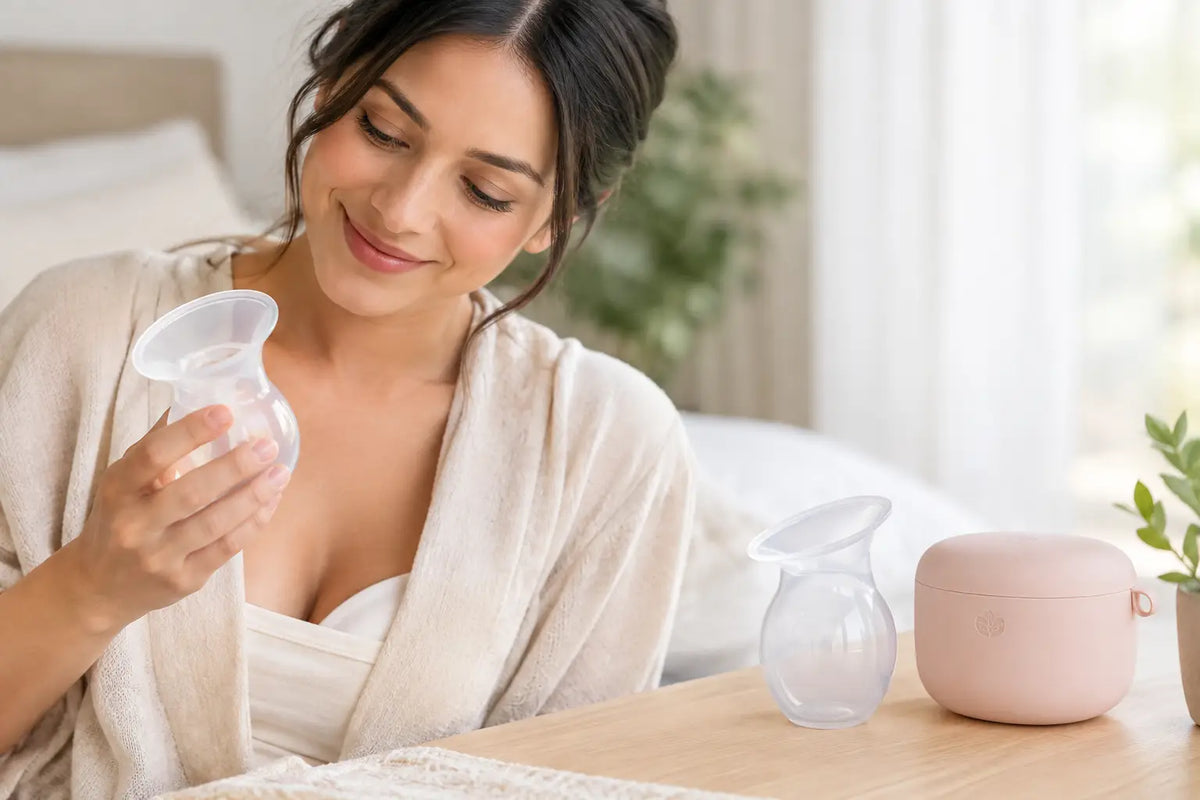
That unexpected letdown on the opposite side can leave your nursing pad damp and your fresh milk going to waste. A silicone milk collector offers a quiet, simple way to catch it - and this silicone milk collector review looks at what it does well, where it needs care, and whether it belongs in your postpartum routine.
For many mothers, it is one of those small breastfeeding tools that can make a surprisingly meaningful difference. Because every drop counts, especially in the early weeks when feeding, healing, and learning your baby’s rhythms can already feel like a full day’s work.
What a silicone milk collector is designed to do
A silicone milk collector is a soft, flexible vessel worn over one breast while your baby feeds from the other. It uses gentle suction to stay in place and collect milk released during a natural letdown. Unlike an electric breast pump, it does not require charging, parts, or a lengthy setup.
That simplicity is its greatest strength. You can keep one nearby for feeds when you notice that the non-feeding side tends to leak. It can also be useful when you are sitting comfortably at home and want a low-effort way to collect milk that might otherwise soak into a pad.
Still, it helps to set the right expectation. A collector is not a replacement for a double electric pump when you need to express milk efficiently or build a structured pumping routine. Think of it as a supportive companion: gentle, portable, and especially helpful for catching letdown.
Silicone milk collector review: the benefits that matter
The best feature is ease. A quality silicone collector has no motor, no cords, and no complicated assembly. When you are managing feeds with one hand and trying to protect a few quiet minutes with the other, that matters.
Its soft feel is another reason many mothers reach for it. Medical-grade or food-grade silicone should feel smooth against the breast, without hard edges pressing into sensitive skin. In the tender postpartum period, comfort is not an extra feature. It is part of whether a product will actually be used.
Many collectors are also compact enough to slip into a hospital bag, diaper bag, or bedside basket. You do not need a large setup for a single feed, which makes it a practical option for mothers who want to collect small amounts consistently over time.
A collector can also help you notice your own patterns. You may find that you leak most in the morning, during particular feeds, or only in the first few weeks. This information is useful, but there is no need to measure your breastfeeding success by the amount collected. Some mothers have a strong letdown, while others do not leak at all. Both can be completely normal.
Where a milk collector may fall short
Gentle suction can feel comfortable, but it also means secure placement takes practice. If the collector is not centered well or the seal is weak, it can shift. A sudden kick, a curious hand, or leaning forward too soon may lead to a spill.
This is why a stable base is more than a nice detail. A collector that can stand securely on a flat surface gives you a safer place to set it down after a feed. Even so, move slowly and keep it out of reach of little hands. Collected milk deserves the same careful handling as milk expressed by any other method.
Capacity is another trade-off. A larger collector can hold more, but it may feel heavier as it fills and can be less discreet. A smaller design is easier to wear and carry but may need to be emptied sooner. For most mothers, a moderate size that feels manageable during a typical feed is more valuable than the largest possible volume.
It is also worth being clear about suction. Some mothers enjoy the added stimulation, while others find any suction uncomfortable or notice that it increases milk flow more than they want. If you are managing oversupply, recurrent clogged ducts, nipple pain, or have been advised to limit breast stimulation, ask a lactation consultant or healthcare professional whether this tool suits your specific situation.
A collector is not meant to hurt
A little pulling sensation can be expected when creating the seal. Pain, pinching, whitening of the nipple, or lingering soreness are signs to stop and reassess the fit. More suction is not automatically better. A gentle seal that stays comfortable is the goal.
If discomfort continues, do not push through it. Breastfeeding support should make your day feel more manageable, not add another source of stress.
What to look for before you buy
Not every silicone collector is made with the same attention to comfort and daily use. Start with the material. Look for clearly labeled, high-quality silicone that is free from strong odors and feels soft and substantial rather than thin or tacky.
Then examine the rim. A wide, smooth flange can create a comfortable seal across different breast shapes, while a narrow or stiff rim may be harder to position. The opening should feel generous enough to center the nipple without rubbing.
A secure cap is particularly helpful if you plan to transfer milk shortly after a feed or carry the collector from one room to another. A protective lid can also keep dust away while you finish settling your baby. Some designs include a neck strap or a stabilizing base. These are useful safeguards, but they do not replace careful handling.
For mothers seeking an elevated, lactation-informed option, a wearable milk collector from Noora Motherhood fits naturally into a broader care routine that values comfort, thoughtful design, and expert support.
How to use a silicone collector with less mess
Begin with clean hands and a clean, fully dry collector. Fold the flange back, center the opening over your nipple, then gently release the flange so it creates a light seal around the breast. You should not need to force it or create intense suction.
Wear it while feeding on the other side and check it occasionally, particularly in the beginning. When you are finished, break the seal carefully by slipping a finger under the rim rather than pulling the collector straight off. Keep it upright, place it on its base if it has one, and cover it promptly.
If you plan to save what you collect, follow safe milk storage guidance from your healthcare provider or local health authority. Use a clean, appropriate storage container, label it clearly, and avoid leaving collected milk unattended. If it spills, let that be an ordinary moment of motherhood, not a reason to blame yourself.
Cleaning is part of the review
A collector only stays convenient if it is easy to clean. Wash it after each use with warm water and mild soap, paying attention to the inside of the flange and any lid or valve. Rinse thoroughly and allow all parts to air-dry completely on a clean surface.
Before first use, and as recommended by the manufacturer, sanitize the collector according to its care instructions. Silicone is generally durable, but repeated exposure to very high heat or harsh cleaning products can shorten its life. Replace it if you notice tears, cloudiness that will not wash away, stickiness, or damage around the rim.
Is a silicone milk collector worth it?
It is worth considering if you regularly leak on the opposite side during feeds, want a quiet collection option for home, or prefer a simple tool with no charging or assembly. It may be less useful if you rarely experience letdown leakage, dislike suction, or need a more consistent expression routine.
The most helpful breastfeeding products are rarely the loudest or most complicated. Sometimes support looks like a soft silicone cup within reach, a clean towel nearby, and the reassurance that you are caring for yourself as thoughtfully as you care for your baby. You are doing amazing, mama.


