A nipple shield can feel like a small detail when you are already navigating tenderness, latching concerns, pumping, and the endless rhythm of early feeding. Yet nipple shield material has a real effect on how the shield feels against sensitive skin, how well it stays in place, and whether it gives you the support you need without adding another source of discomfort.
For most mothers, a well-made silicone shield is the gentle, practical choice. But material alone is not the whole story. Thickness, flexibility, edge design, size, hygiene, and the reason you are using a shield all matter. You deserve tools that feel considered, comfortable, and safe - not something you simply tolerate.
Why Nipple Shield Material Matters
A nipple shield sits directly on the breast during feeding, often at a time when the nipple and areola may already be tender. The material needs to be soft enough to feel kind to your skin, but structured enough to hold its shape and stay positioned. If it is too thick, stiff, or poorly fitted, it can feel distracting and may make it harder to achieve a comfortable, secure latch.
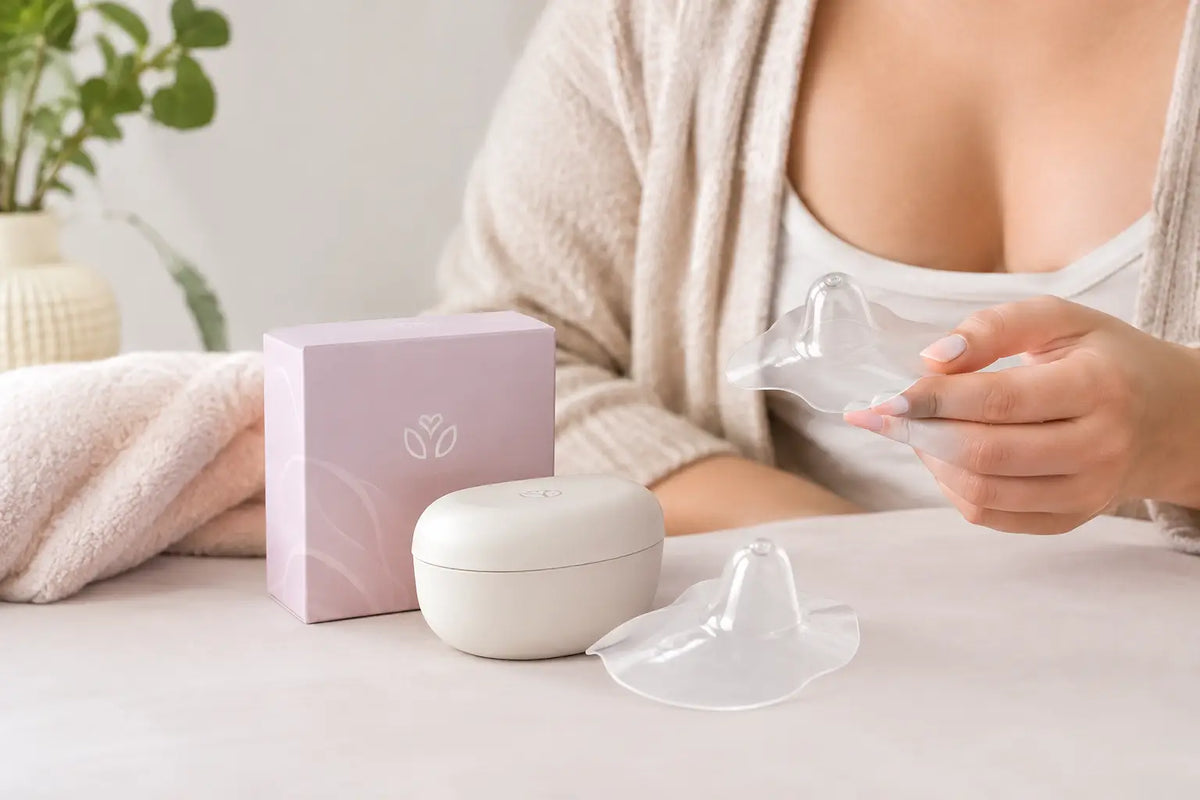
Modern nipple shields are most often made from silicone. High-quality, food-grade silicone is smooth, flexible, odor-free, and easy to clean. Its gentle texture is especially valuable in the early postpartum weeks, when even light friction can feel overwhelming. A thin silicone design also allows more closeness and responsiveness than a bulky shield.
Older styles were sometimes made from latex or rubber. These materials are less common now, partly because latex can cause sensitivity in some people and tends to have a stronger smell or taste. If you have known allergies or very reactive skin, choosing a latex-free silicone shield is a sensible precaution. When in doubt, review the product materials and speak with your healthcare professional or lactation consultant.
Silicone Nipple Shield Material: What to Look For
Not all silicone feels the same. A premium nipple shield should feel soft and supple in your hand, with a thin contact area and a stable base. It should not have a tacky surface, a strong chemical odor, rough seams, or edges that dig into the breast.
The best nipple shield material is usually thin, soft silicone because it balances comfort with function. Thin does not mean flimsy. The shield still needs enough structure to maintain its shape during use, while moving naturally with your body. A broader, well-designed base can help it lie smoothly against the areola and reduce the tendency to lift or shift.
Transparency can also be useful. A clear shield lets you see placement more easily and notice milk inside the shield. That visual reassurance can be comforting when you are learning what works for you, especially after a difficult start.
Material quality also affects longevity. Silicone should remain smooth and flexible with proper care. If a shield becomes cloudy, sticky, cracked, torn, misshapen, or difficult to clean, it is time to replace it. A worn shield is less comfortable and harder to keep hygienic.
Comfort Depends on More Than Material
A beautiful silicone shield will not solve a sizing issue. The tunnel of the shield needs to accommodate your nipple comfortably without compressing it or creating excess rubbing. If the tunnel is too small, feeding may feel pinchy and your nipple may look flattened or misshapen afterward. If it is too large, you may notice too much pulling of the areola into the tunnel or difficulty keeping the shield stable.
Pain is information, not something you need to push through. Mild sensitivity can happen during the adjustment period, but persistent pain, cracking, bleeding, or worsening soreness deserves expert attention. A shield can be a helpful temporary tool for certain feeding challenges, but it should be part of a plan that considers positioning, latch, milk supply, nipple comfort, and your individual goals.
This is where personalized guidance matters. A lactation professional can observe a feeding session and help determine whether a shield is appropriate, what size may suit you, and how to use it in a way that protects both comfort and milk removal. Noora Motherhood was built around this kind of care: practical products paired with the reassurance that mothers should not have to figure everything out alone.
Thickness and flexibility
Very thick shields can create a noticeable barrier and may feel less natural on tender skin. Very thin shields tend to offer more sensitivity and closeness, though they must still be durable enough to handle regular use. There is no universal “thinnest is best” rule. The right choice is the one that fits well, stays in place, and helps feeding feel more comfortable and effective for you.
Flexibility matters at the base, too. A pliable edge can conform more gently to the breast, while a rigid edge may lift, trap moisture, or leave pressure marks. Before use, inspect the shield in good light. The surface should be intact, clean, and smooth from the tunnel to the outer edge.
Texture and skin sensitivity
Most mothers prefer a smooth finish because it is easy to clean and less likely to irritate sore skin. If you are prone to eczema, contact dermatitis, or allergies, minimize unnecessary variables. Use a shield made from clearly identified materials, wash it with mild soap as directed, and avoid fragranced products that may leave residue.
If your skin develops itching, rash, swelling, or burning that is new or severe, stop using the shield and seek medical guidance. These symptoms may have several causes, and an expert can help you identify what needs attention.
How to Care for Silicone Shields
Silicone is reassuringly low-maintenance, but careful cleaning protects both the material and your skin. Wash your hands before handling the shield. After each use, rinse it with cool or lukewarm water, then wash it thoroughly according to the manufacturer’s instructions. Make sure milk residue is removed from the tunnel and any small openings.
Allow the shield to air-dry completely on a clean surface before storing it in a clean, dry case. Moisture left in an enclosed container can create an unhygienic environment. Avoid harsh cleaners, abrasive scrubbers, and very sharp objects that can damage the silicone.
If sterilization is recommended for your particular shield, follow the product instructions rather than assuming every silicone item needs the same method. Excessive heat or repeated treatment beyond the guidance can shorten the life of some products. Clean care is not about perfection. It is about creating a simple, reliable routine that supports your peace of mind.
When a Shield Is Helpful - and When to Ask for Support
Nipple shields may be suggested for short-term challenges such as nipple soreness, certain latch difficulties, or a baby who is having trouble maintaining a latch. They can offer a protective layer while you and your little one work toward a more comfortable feeding experience. For some mothers, they are a bridge during a tender season. For others, they are not necessary at all.
Because a shield can affect how milk is transferred, it is wise to pay attention to comfort, feeding cues, breast fullness, and your baby’s growth. If feeding becomes painful, you are worried about supply, your breast is not softening as expected, or your baby seems unsettled after most feeds, reach out early. A small adjustment can make a meaningful difference.
The same is true if the shield repeatedly slips off. Often, this is not a material failure. A little moisture on the inner base can help silicone adhere, but persistent slipping may point to placement, size, or breast shape. You do not need to keep trying alone when expert support can bring clarity.
Choose Gentle Materials, Then Trust Your Comfort
The right nipple shield material should feel like quiet support: soft, clean, flexible, and dependable when you need it. High-quality silicone is often the preferred choice because it is gentle on sensitive skin and simple to care for, but fit and skilled guidance are what turn a product into real relief.
Listen to your body. If a shield makes feeding calmer, more comfortable, and more manageable, that matters. And if something feels off, asking for help is not a setback. It is one more way you are caring for yourself and your little one. You are doing amazing, mama - one supported feed at a time.


