A sudden letdown can happen while you are feeding, pumping, settling into sleep, or simply trying to drink a warm cup of tea before it goes cold. When choosing bamboo pads versus disposable pads, the right answer is not about being the “best” kind of mother. It is about finding leak protection that feels comfortable, works with your routine, and gives your skin the gentleness it needs.
Both options can have a place in a breastfeeding journey. Some mothers prefer the soft, familiar feel of reusable bamboo nursing pads every day. Others need the convenience of a fresh disposable pad during the early weeks, while traveling, or when laundry feels like one more task than they can manage. You are doing amazing, mama. Let’s make the choice simpler.
Bamboo Pads Versus Disposable Pads: The Everyday Difference
The main difference is straightforward: bamboo pads are washable and reusable, while disposable pads are designed for one-time use. But how that difference feels in real life comes down to softness, absorbency, breathability, fit, and the rhythm of your days.
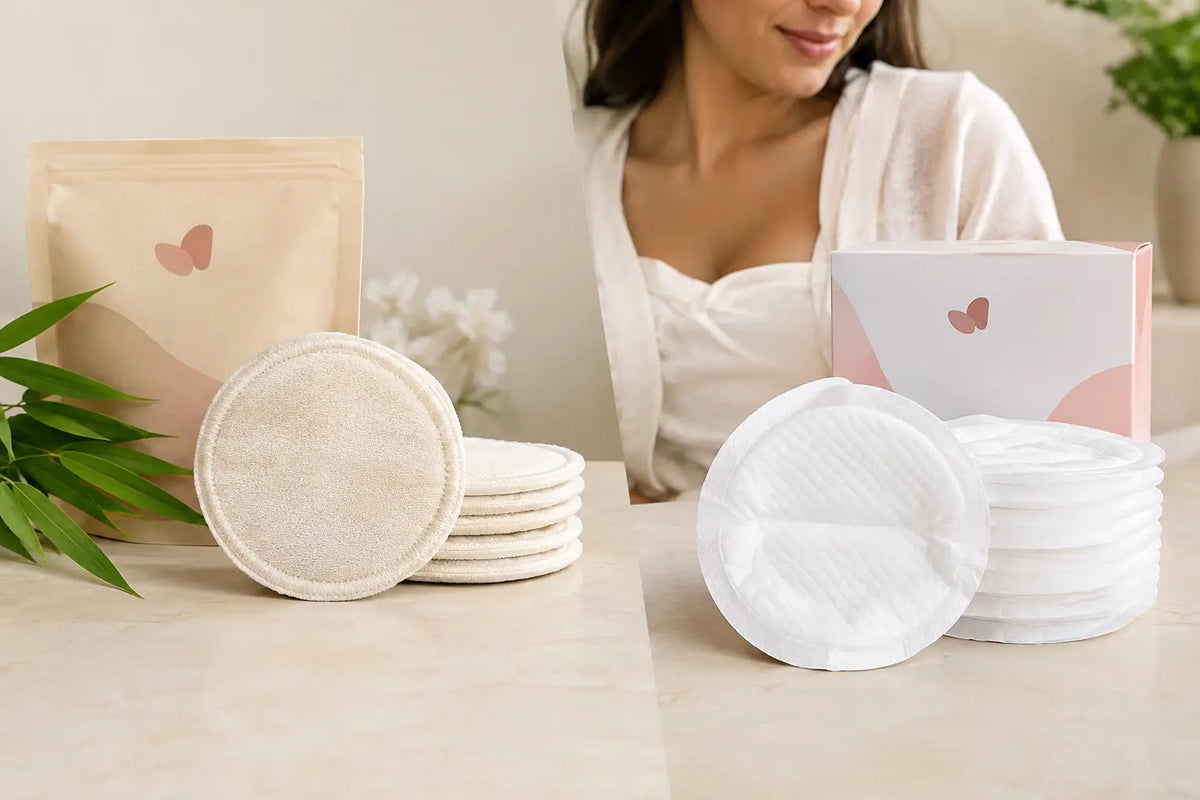
Reusable bamboo pads are typically made with soft bamboo-derived fabric layers and an absorbent inner core. They sit gently inside your bra to absorb milk leaks and protect clothing. After use, they are washed and worn again. For mothers who are sensitive to scratchy fabrics or who want a lower-waste routine, their softness can be especially comforting.
Disposable pads are often thinner and individually wrapped, making them easy to tuck into a handbag or keep nearby when you are out. Once damp, they are removed and replaced with a clean pad. This can feel wonderfully simple in the first postpartum days, when you are recovering, feeding frequently, and learning what your body needs.
Neither choice needs to be permanent. Many mothers keep both on hand and choose based on the day ahead.
Comfort Matters More Than You May Think
Breastfeeding skin can be tender, especially during the early weeks. A nursing pad should feel soft against the breast and should not trap moisture against the skin for long periods. Dampness can cause discomfort, rubbing, and irritation, even when your latch and feeding routine are otherwise going well.
Bamboo pads are often loved for their plush, fabric-like feel. They can be a beautiful option for mothers who find paper-like materials irritating or who simply want a more natural-feeling layer against their skin. A well-made reusable pad should stay smooth, hold its shape, and be large enough to offer coverage without bunching under clothing.
Disposable pads can feel lighter and less noticeable under a bra, depending on the design. Some have a contoured shape or adhesive strips to help them stay in place. Still, sensitivity varies greatly. If a pad feels rough, makes you sweaty, shifts around, or leaves the skin feeling damp, it is not the right fit for you, regardless of how popular it may be.
A small but meaningful habit is to change pads as soon as they feel wet. Fresh, dry contact supports comfort and helps you feel more confident through long days and interrupted nights.
For sore or sensitive nipples
If you have soreness, cracked skin, itching, or persistent discomfort, choose the softest, most breathable option you can and change it frequently. Avoid heavily fragranced pads or materials that cause irritation. Nursing pads can protect clothing, but they do not replace personalized lactation support when pain continues.
A lactation consultant can help identify whether the cause may be friction, milk oversupply, a feeding-position issue, or something else that deserves care. You should never have to simply push through pain alone.
Absorbency: Think About Your Heaviest Moments
Milk leakage is unpredictable at first. Some mothers leak only occasionally, while others need reliable protection between nearly every feed or pumping session. Your ideal pad depends on your flow, not on a label that promises “maximum absorbency.”
Disposable pads can be very practical for heavier leaks because a saturated pad can be thrown away immediately. They may also be useful overnight or while away from home, when changing and storing a reusable pad is less convenient. Look for a pad that pulls moisture inward rather than leaving it pooled on the surface.
Bamboo pads can be absorbent too, particularly thicker, multi-layer designs. Their advantage is that they can be washed and reused again and again. The trade-off is that they may feel bulkier under a fitted top, and you will need enough pairs to ensure that clean, dry pads are always ready.
For many mothers, a mixed approach offers the most ease: reusable bamboo pads for home and everyday wear, with a few disposable pads packed for appointments, errands, travel, or unexpected longer days.
The Practical Question: Laundry or Disposal?
The most sustainable option is the one you can genuinely maintain. Reusable pads reduce daily waste and may be more cost-effective over time, especially if you expect to need nursing pads for several months. Yet they do require washing, drying, and keeping track of a rotation.
To care for bamboo pads, rinse or wash them after use according to their care instructions. Use a gentle, fragrance-free detergent if your skin is sensitive, and make sure the pads are fully dry before wearing them again. Having several pairs matters. It means you are not waiting on a wash cycle when you need a fresh pad now.
Disposable pads remove that laundry step, which can be a real gift during a demanding season. Their trade-off is ongoing cost and more waste. They are not less caring or less thoughtful to use. Convenience is a valid need, particularly when rest is scarce and your hands are already full.
Fit, Discretion, and Your Clothing
A pad can be absorbent and still be frustrating if it moves, folds, or shows through clothes. The best fit sits securely inside your nursing bra, covers the nipple area fully, and lies flat enough that you can move comfortably.
Bamboo pads tend to be thicker, especially highly absorbent styles. Under loose layers, this may not matter at all. Under a smooth, close-fitting top, you may prefer a slimmer pad or a bra with slightly more structure. Disposable pads are often designed to be thinner, but thin does not always mean better if they become saturated quickly.
Try your pads with the clothes you wear most. A comfortable at-home set-up may look different from what you want under an abaya, workwear, or an occasion outfit. This is not vanity. Feeling put together can be a quiet form of support during postpartum life.
When Each Option Makes the Most Sense
Choose reusable bamboo pads if softness, reusability, and a cozy fabric feel are high on your list. They are especially suited to mothers who are mostly at home, can manage a regular wash routine, or notice that their skin prefers breathable textile layers.
Choose disposable pads if you need low-effort changes, are away from home often, have limited laundry access, or want a simple option for the earliest days. They can also be reassuring to carry as a backup, even if reusable pads are your usual choice.
If you are unsure, begin with a small supply of each. Your milk flow, skin sensitivity, and daily schedule may change from week to week. The most useful breastfeeding accessories are the ones that adapt with you, rather than ask you to adapt around them.
Noora Motherhood’s reusable bamboo nursing pads are designed for the tender realities of this season: softness against sensitive skin, dependable everyday coverage, and the reassurance of having one less thing to worry about. Because every drop counts, but so does your comfort.
There is no prize for choosing the most complicated routine. Choose the pad that lets you move through your day feeling dry, cared for, and a little more at ease - then give yourself credit for every quiet, loving thing you are doing.


