The first days of breastfeeding can make even a soft cotton top feel like too much. Tenderness is common as your body adjusts, but pain should never be something you simply endure. This postpartum nipple care routine guide is designed to help you create small moments of comfort, protect healing skin, and recognize when you deserve more personalized support. You are doing amazing, mama, and care for your nipples is part of care for your whole postpartum self.
Why nipple tenderness happens postpartum
Your nipples are adapting to frequent feeding, changing hormones, moisture, friction, and sometimes pumping. Mild sensitivity in the early days may settle as feeding becomes more established. However, sharp pain, cracked skin, or soreness that worsens after each session is a sign to look more closely at what is happening.
Often, the cause is not simply “sensitive nipples.” Positioning and latch can affect how deeply your baby takes the breast, while a pump flange that is too small, too large, or not centered can create rubbing and swelling. Oversupply, engorgement, skin sensitivity, and trapped moisture can also make discomfort harder to manage.
The goal is not to follow a complicated ritual. It is to reduce irritation, keep the skin comfortable, and address the reason for ongoing pain rather than covering it up.
A postpartum nipple care routine guide for every day
A gentle routine works best when it fits into the rhythm you already have. Think of it as a few supportive steps after feeding or pumping, plus a little preparation for the hours ahead.
After each feeding or pumping session
Start by checking in with how your nipples feel. A brief look can help you notice redness, blanching, compression marks, cracks, or changes in shape. If you see a pinched or creased nipple after feeding, or if pumping leaves persistent rings or rubbing, it may be time for a latch or flange-fit assessment.
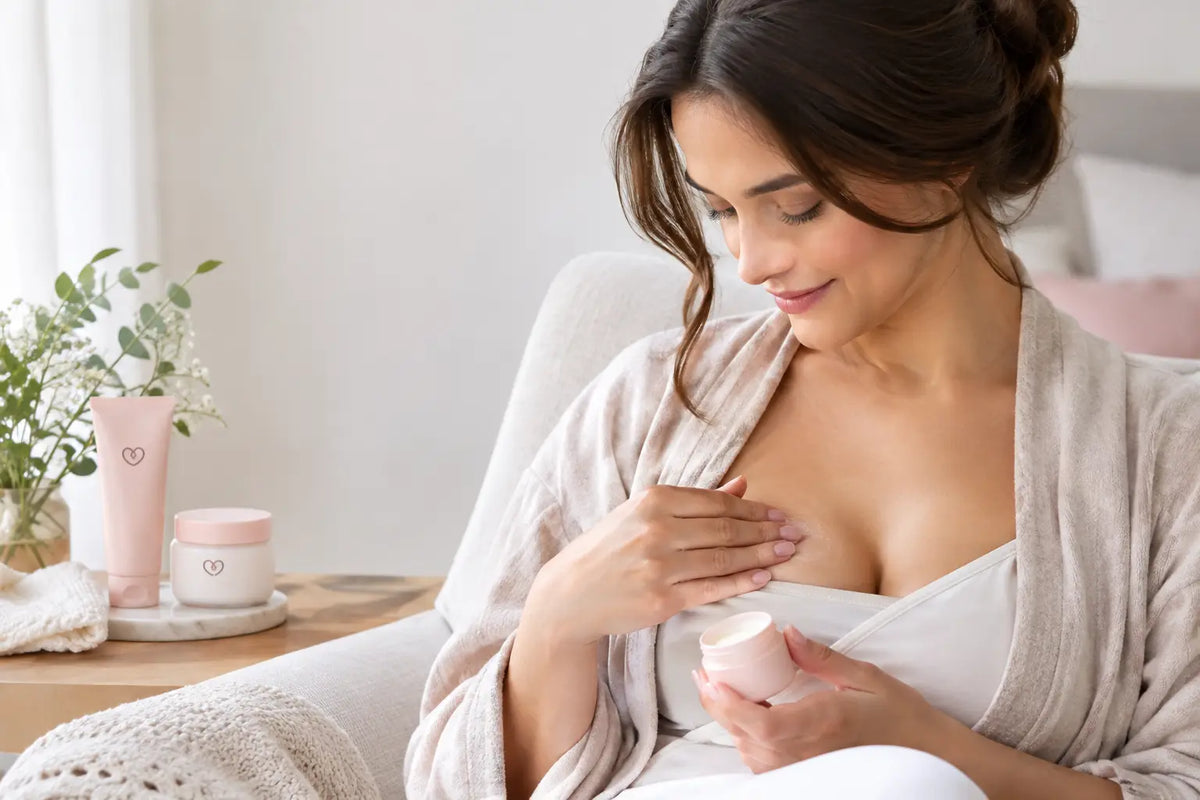
If your nipples feel tender, allow them to air dry for a few minutes when possible. You can then apply a thin layer of a breastfeeding-safe nipple balm if it feels soothing and is appropriate for you. More product is not always better. A light protective layer can reduce friction without leaving the area overly damp.
When soreness is linked to swelling or heat, cooling pads can bring welcome relief. Use them as directed and place a soft fabric layer between the pad and skin if direct cold feels uncomfortable. For some mothers, warmth before feeding or pumping and cooling afterward feels best. Your body will tell you which approach brings comfort.
Change damp nursing pads promptly. Moisture held against the skin can increase irritation, especially when nipples are already tender. Soft, breathable reusable bamboo nursing pads can make a meaningful difference during long days and interrupted sleep.
Give healing skin room to breathe
Constant friction is often what turns mild soreness into a lingering problem. At home, choose soft bras and tops that do not press tightly against the nipple area. If fabric contact feels unbearable, silver nipple covers may create a protective space between sensitive skin and clothing. They can be especially helpful during periods of tenderness, but they should feel comfortable, clean, and easy to remove.
Keep your care simple. Avoid harsh soaps, scrubbing, fragranced products, or frequent washing of the nipple area, all of which can strip the skin and make dryness worse. A gentle daily shower is usually enough. If you are using a cream, balm, or any treatment for broken skin, follow the guidance of your lactation consultant or healthcare provider.
Make pumping more comfortable
Pumping should not cause ongoing pain. Before your session, make sure the flange tunnel centers your nipple without pulling in excessive surrounding tissue. Your nipple should move freely, with minimal rubbing against the sides. A better fit can reduce friction, help you feel more comfortable, and support effective milk expression.
Suction also matters. Higher settings are not automatically better. Use the lowest setting that feels comfortable and effective, then adjust gradually only if needed. If you notice swelling, whitening, bruising, or pain during pumping, pause and reassess your setup. Flange inserts can help create a more tailored fit when the standard size is not right for your body.
A portable double pump can make it easier to care for your milk supply while staying close to your recovery needs, but comfort should remain the priority. Noora Motherhood was created with this reality in mind: practical breastfeeding tools paired with lactation-informed support, because every drop counts and every mother deserves gentler care.
Match your comfort tools to what you feel
Your nipple care routine may change from one day to the next. A cooling pad can feel wonderful after a day of tenderness, while a warm therapy pad may be more helpful before pumping when your breasts feel full and tight. There is no prize for using every tool at once. Choose what responds to the discomfort you are actually experiencing.
For leakage, breathable nursing pads help protect clothing while keeping moisture away from the skin. Wearable milk collectors can be useful when you notice letdown on the opposite side during feeding, helping you save milk that might otherwise be lost. Empty and clean them according to their instructions, and do not wear any collector for so long that the skin feels hot, compressed, or damp.
If nipples are cracked or very sore, prioritize less friction, proper latch support, and a pump fit check. A balm or protective cover may make the hours easier, but the underlying cause still deserves attention. Comfort products are most effective when they work alongside good breastfeeding support, not in place of it.
When nipple pain needs expert help
Please reach out to a lactation consultant or healthcare professional if pain is severe, persistent, or making you dread feeding or pumping. You do not need to wait until you feel completely overwhelmed. Early guidance can often prevent a small issue from becoming a difficult recovery.
Seek timely care if you notice any of the following:
- Cracks that are deep, bleeding, or not improving
- Burning, itching, shiny skin, or pain that continues between feedings
- Fever, chills, flu-like symptoms, or a painful red area on the breast
- Pain that feels sharp throughout feeding or pumping, even after adjusting position and fit
Make the routine realistic for postpartum life
The most supportive routine is one you can follow on little sleep. Keep a small care basket where you usually feed or pump: clean nursing pads, your chosen balm, a cooling option, a clean cover, water, and a soft cloth. That way, comfort is within reach rather than another task to organize.
You may also find it helpful to do one quick check each day: Is the pain improving, staying the same, or getting worse? Are your nipples healing between sessions? Does your pump still feel comfortable? These simple questions help you notice patterns before discomfort becomes your normal.
Your postpartum body deserves patience, not pressure. A few gentle minutes of care can protect your skin, ease the next feeding or pumping session, and remind you of something essential: you are worthy of support too.


