

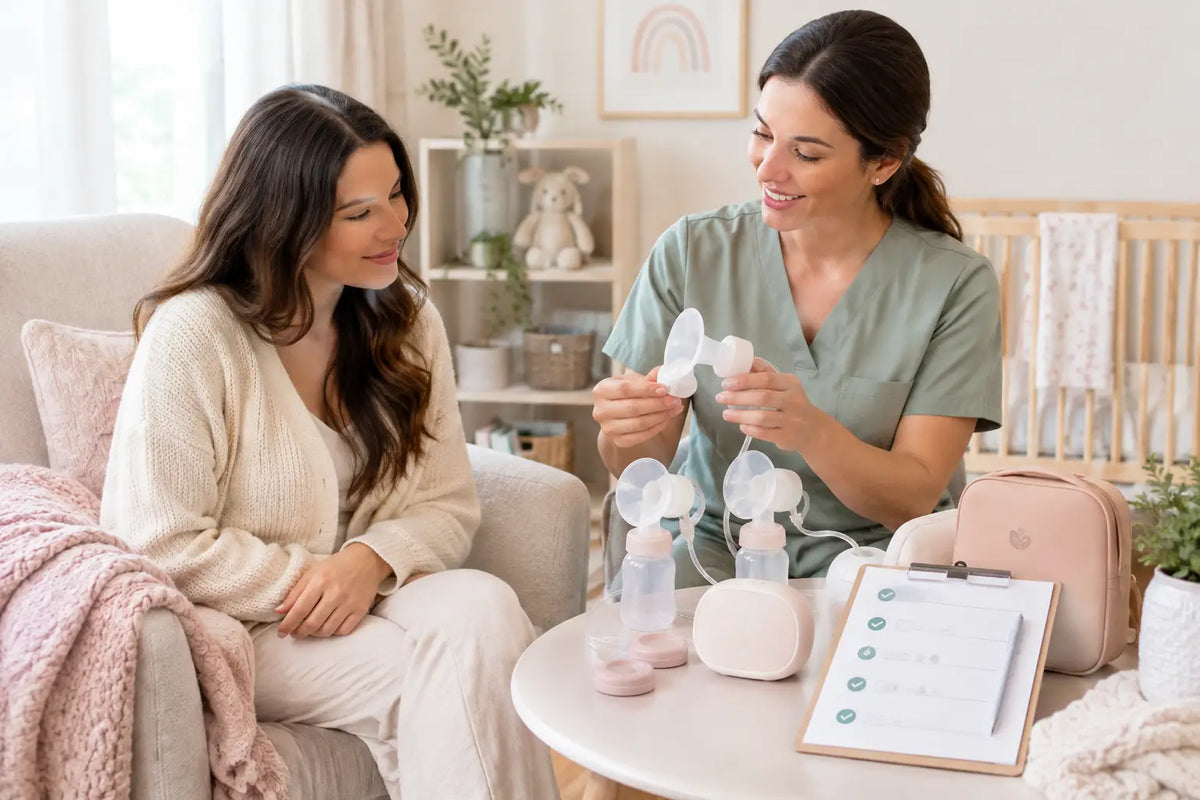
A pumping session can feel surprisingly emotional. You may be watching the clock, checking the collection cups, and wondering whether the amount you see means you are doing enough. Many new mom pumping mistakes come from that pressure, not from a lack of care or effort. Your body is healing, your feeding relationship is still taking shape, and pumping is a skill that often needs gentle adjustment.
You are doing amazing, mama. The goal is not to pump perfectly. It is to find a routine that protects your comfort, supports your milk removal, and feels sustainable in real life.
1. Using the Wrong Flange Size
A flange that does not fit well is one of the most common reasons pumping becomes painful or inefficient. The tunnel should allow the nipple to move freely without rubbing heavily along the sides. Too much areola being drawn in, pinching, whitening, swelling, or persistent soreness can all suggest that the fit needs attention.
It is easy to assume that the standard size included with a pump will suit everyone. In reality, nipple size can vary from one side to the other and may change as swelling settles in the early postpartum weeks. A comfortable fit matters more than choosing the size that looks most familiar.
If your pumping sessions hurt, do not simply turn down the suction and tolerate it. Assess the flange fit first. Flange inserts can help create a more personalized fit, and a lactation professional can assess your positioning and nipple movement if you are unsure.
2. Starting With Suction That Is Too Strong
More suction does not automatically mean more milk. In fact, using a level that feels sharp, pulling, or painful can make your body tense up, which may make milk release more difficult. Strong suction can also leave nipples irritated after a session.
Start at a comfortable, gentle setting and increase only until the pull feels effective but not painful. Think of pumping as consistent, comfortable milk removal rather than a test of endurance. Your best setting is the one you can use without bracing yourself.
If you feel discomfort throughout the session, pause and check your alignment, flange size, and settings. Pain is useful information, not something you need to push through.
3. Judging Your Supply by One Session
The amount you pump can change across the day and from one day to the next. Hydration, stress, sleep, recent feeding, the time since your last milk removal, and your body’s natural rhythms can all affect what you collect. A smaller session does not tell the whole story about your milk supply.
For mothers who are pumping regularly, patterns over several days are more meaningful than one disappointing collection. If you are pumping after nursing, it is also normal to collect a different amount than you might during a standalone session.
Instead of measuring your success in ounces, notice the bigger picture: Is pumping becoming more comfortable? Are you removing milk regularly? Do you have concerns about your baby’s growth or feeding behavior? Those questions deserve individualized support, especially in the early weeks.
4. Waiting Until You Feel Overly Full
When life is busy, it is tempting to delay a session until you feel very full. Occasionally, that may happen. But repeatedly waiting until you are uncomfortable can make pumping harder and may contribute to clogged areas or inflammation for some mothers.
A realistic routine is kinder to your body than chasing a rigid schedule. If you are establishing or maintaining milk production, regular milk removal is generally more helpful than infrequent, extra-long sessions. The exact rhythm depends on your postpartum stage, your feeding goals, and how your body responds.
Try setting yourself up before you reach the point of discomfort. Keep your pump charged, clean parts ready, and a place to sit with water nearby. Small preparation can turn an interrupted day into a calmer moment of care.
5. Skipping Comfort Measures for Tender Nipples
Tenderness can happen in the early days, but ongoing cracks, bleeding, intense pain, or pain that worsens need attention. Pumping should not leave you dreading the next session.
After pumping, give nipples a chance to air-dry before covering them. Soft, breathable nursing pads can help manage leaks while being gentle on sensitive skin. Cooling pads may offer welcome relief when you feel swollen or sore, while hot and cold therapy pads can be useful at different moments depending on whether you need warmth before milk removal or cooling afterward.
For mothers who need protection from fabric friction between sessions, silver nipple covers can be a soothing option. The right comfort tool is not a luxury when you are recovering. It can make it easier to continue a routine that supports both you and your baby.
6. Forgetting the Small Details That Affect Pumping
Sometimes pumping challenges are not about your body at all. Worn valves, poorly assembled parts, a low battery, or parts that are not fully dry can affect suction and make a session feel frustrating. Before assuming your supply has changed, inspect the practical details.
Wash and dry pump parts according to the manufacturer’s instructions, and replace components when they show wear. Make sure all pieces are securely connected before you begin. If your portable pump is part of your daily routine, charging it after use can prevent the stress of an unexpected interruption.
A compact double electric pump such as the Noora MightyMini can make it easier to fit pumping into a full day, but convenience still works best when paired with a simple care routine. A few minutes of preparation protects your time and your peace.
7. Treating Pumping as a Test You Must Pass
Many mothers sit down to pump and immediately begin monitoring every drop. That watchful feeling is understandable, especially when you care deeply about your baby and your feeding goals. Yet stress can make a session feel longer and harder than it needs to be.
Create a small ritual that tells your body it is safe to settle. Sit comfortably, place a warm pad on the breasts beforehand if that feels good, take slow breaths, and avoid constantly checking the collection cups. Some mothers respond well to a quiet room; others prefer a familiar show or a voice note from a loved one. It depends on what helps you soften your shoulders.
This is not about forcing relaxation or blaming yourself when milk is slow to release. It is simply an invitation to make pumping less clinical and more supportive.
8. Waiting Too Long to Ask for Help
There is no prize for figuring everything out alone. A lactation consultation can be particularly helpful if you have persistent pain, recurring clogs, nipple damage, concerns about milk production, trouble finding a comfortable flange fit, or uncertainty about your pumping plan.
Contact your healthcare provider promptly if you develop a fever, chills, flu-like symptoms, worsening breast redness, or a painful area that does not improve. These symptoms deserve timely medical guidance.
Expert support can also be valuable before a problem becomes urgent. A few personalized adjustments can save you days of discomfort and second-guessing. Because every drop counts, but so does your wellbeing. Let your pumping routine be one small part of your care, not another place where you feel you must prove yourself.


