

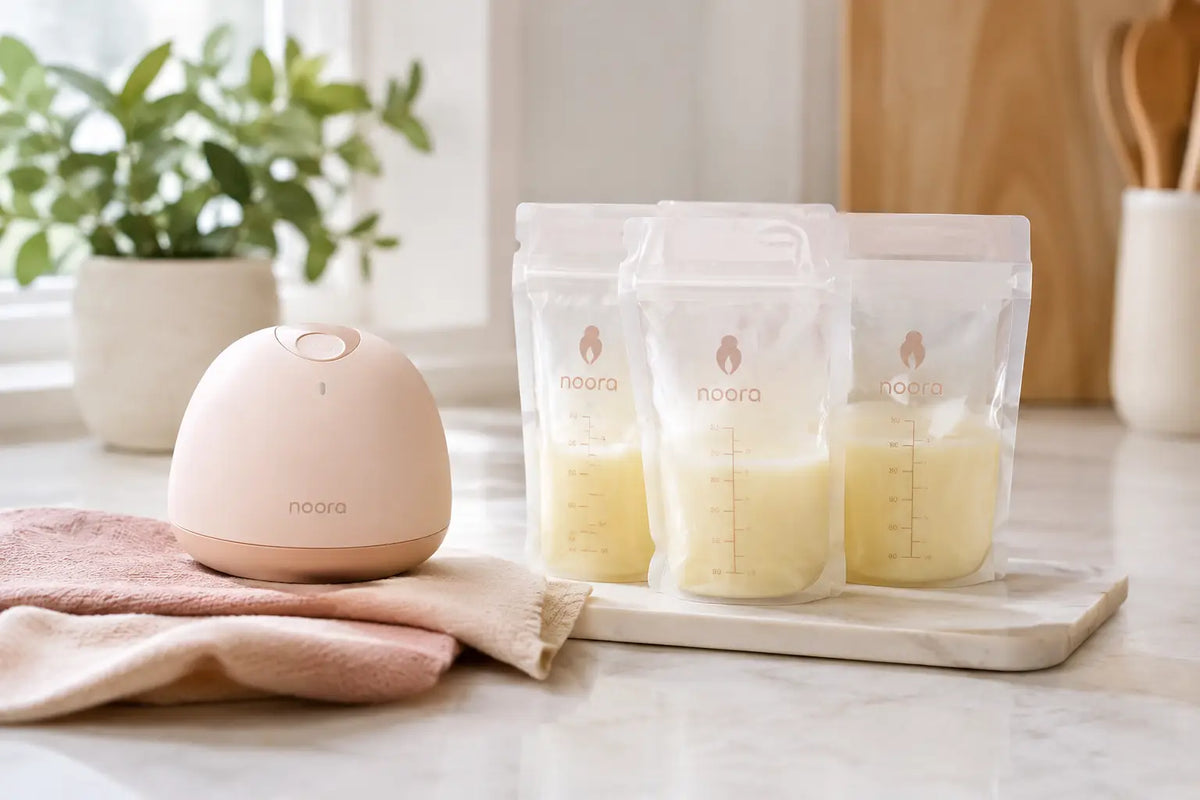
Those tiny golden drops can feel incredibly precious, especially when you have expressed them carefully before birth or during the tender early days after delivery. Knowing how to store collected colostrum helps protect every drop while giving you one less thing to worry about. You are doing amazing, mama.
Colostrum is produced in small quantities, but it is rich in nutrition and protective components. Because each collection may be just a few drops or milliliters, clean handling, clear labeling, and prompt storage matter. Your own maternity care team should always have the final say, particularly if you have a medical condition, your newborn needs special care, or you are collecting colostrum before birth.
How to Store Collected Colostrum Safely
Start with clean hands and a sterile, single-use colostrum collector or sterile syringe. If you are expressing by hand, collect directly into the container where possible. This reduces transfers and helps protect the small amount you have worked hard to collect.
Seal the container securely after each collection. Label it with your name, the date, and the time it was expressed. If you are preparing colostrum before delivery, add your date of birth or hospital identification details if your maternity team has asked you to do so. Clear labeling is especially helpful if you will be taking frozen colostrum to the hospital.
Store containers upright in a clean food-storage bag or covered container in the back of the refrigerator or freezer. The back stays colder and more stable than the door, which is opened often. Keep colostrum away from raw foods and avoid leaving it on a counter while you prepare other things.
If You Are Collecting Colostrum Before Birth
Antenatal colostrum collection is not right for every pregnancy. Your obstetrician, midwife, or lactation consultant can tell you whether it is appropriate and when to begin. Many maternity teams recommend starting only from around 36 or 37 weeks, depending on your individual pregnancy and health history.
When collecting before birth, follow the storage plan given by your hospital. Many hospitals ask mothers to refrigerate freshly collected colostrum promptly and freeze it within 24 hours. This is often because antenatal collections are small and may happen several times across a day.
Use a new sterile collector or syringe for each session unless your care team has specifically told you otherwise. Do not add freshly expressed warm colostrum to a container that is already chilled or frozen. Let both portions reach the same chilled temperature first, or keep them in separate labeled containers. It may seem like extra effort, but this simple step helps keep storage safer.
After Birth: Refrigeration and Freezing Times
For freshly expressed human milk, including colostrum collected after birth, these widely used storage guidelines can be helpful for a healthy, full-term newborn at home:
- At room temperature, up to 77°F or 25°C, use within 4 hours.
- In a refrigerator at 40°F or 4°C, use within 4 days.
- In a freezer, 6 months is best for quality, though up to 12 months may be acceptable when necessary.
If you know you will not use refrigerated colostrum within the recommended time, freeze it as soon as possible. Freezing earlier helps preserve quality. Leave a small space at the top of the container because liquid expands as it freezes.
Choosing the Right Storage Container
Small sterile syringes are especially practical for colostrum because they are designed for tiny, measured amounts. They can make it easier to collect, label, store, and transport your colostrum without unnecessary handling. A dedicated colostrum collector can also make those first expressions feel less stressful and less wasteful.
Choose containers made for collecting human milk or colostrum. They should be food-safe, sterile or sterilizable according to the manufacturer's instructions, and able to close securely. Avoid using ordinary household containers, as even a very clean container may not be suitable for safe collection and freezing.
If you are using a pump after your milk volume increases, make sure every part that touches milk is cleaned after use and fully air-dried before the next session. Colostrum can be thick and sticky, so take a moment to check that collectors and connectors are thoroughly clean. Thoughtful tools can make this easier when you are tired and healing.
Freezing Colostrum Without Losing Track of It
Arrange frozen syringes or collectors in a small sealed container or freezer bag, with the oldest date at the front. This makes it easier to use the oldest supply first and prevents a precious collection from being forgotten at the bottom of the freezer.
Keep frozen colostrum away from the freezer door. Temperature changes each time the door opens, and stable cold temperatures are better for stored milk. If you are taking frozen colostrum to a hospital or appointment, carry it in an insulated cooler with frozen ice packs and hand it over as soon as you arrive.
If it starts to thaw during transport, ask the hospital team what they would like you to do. Do not refreeze colostrum that has fully thawed. When you are unsure, it is always kinder to yourself and safer for your newborn to ask than to guess.
A Note on Combining Small Amounts
It is natural to want to combine several small expressions. If you are collecting after birth, cool newly expressed colostrum in the refrigerator before adding it to already chilled colostrum. Do not pour warm colostrum over frozen colostrum, as it can partially thaw what is already frozen.
For antenatal collection, hospitals often prefer each syringe to be stored and labeled separately. This allows staff to see the exact date and time of each collection. It also reduces confusion if only a small amount is needed at one time.
Thawing and Using Stored Colostrum
The gentlest way to thaw frozen colostrum is in the refrigerator. Once it has fully thawed in the refrigerator, use it within 24 hours. You can also warm the outside of the closed container under lukewarm running water if it is needed sooner.
Do not microwave colostrum or place it in boiling water. Uneven heating can damage some of its beneficial properties and create hot spots. Gently swirl the container if needed rather than shaking it vigorously.
Once thawed colostrum has been warmed or brought to room temperature, use it within 2 hours. Any remaining colostrum after a feeding should be discarded within 2 hours from the beginning of that feeding. It can be hard to let even a small amount go, but safety comes first.
When to Ask for Extra Support
Please reach out to your maternity provider or a lactation consultant if you are uncertain about collection, storage, or whether antenatal expression is suitable for you. You deserve guidance that reflects your pregnancy, your recovery, and your newborn's needs, not a one-size-fits-all answer.
You may also need support if expressing is painful, if you are worried about low supply, or if you are struggling to collect enough for your plan. Dr. Soulaf Mansour and the Noora Motherhood approach begin with the same reassurance: small amounts are normal in the colostrum stage. Every carefully stored drop is an act of care, and you do not have to navigate those early moments alone.


