The early weeks of breastfeeding can ask a lot of your body: feeding often, learning a new rhythm, managing leaks, and finding relief when your skin feels tender. The right top breast care accessories do not need to fill every drawer. A few thoughtfully chosen essentials can protect your comfort, simplify pumping, and help you feel more supported through each changing day.
Every mother's experience is different. What feels indispensable for one mama may be unnecessary for another, so the goal is not to buy everything at once. It is to build a small, caring toolkit around the moments you are actually navigating.
Top Breast Care Accessories That Earn Their Place
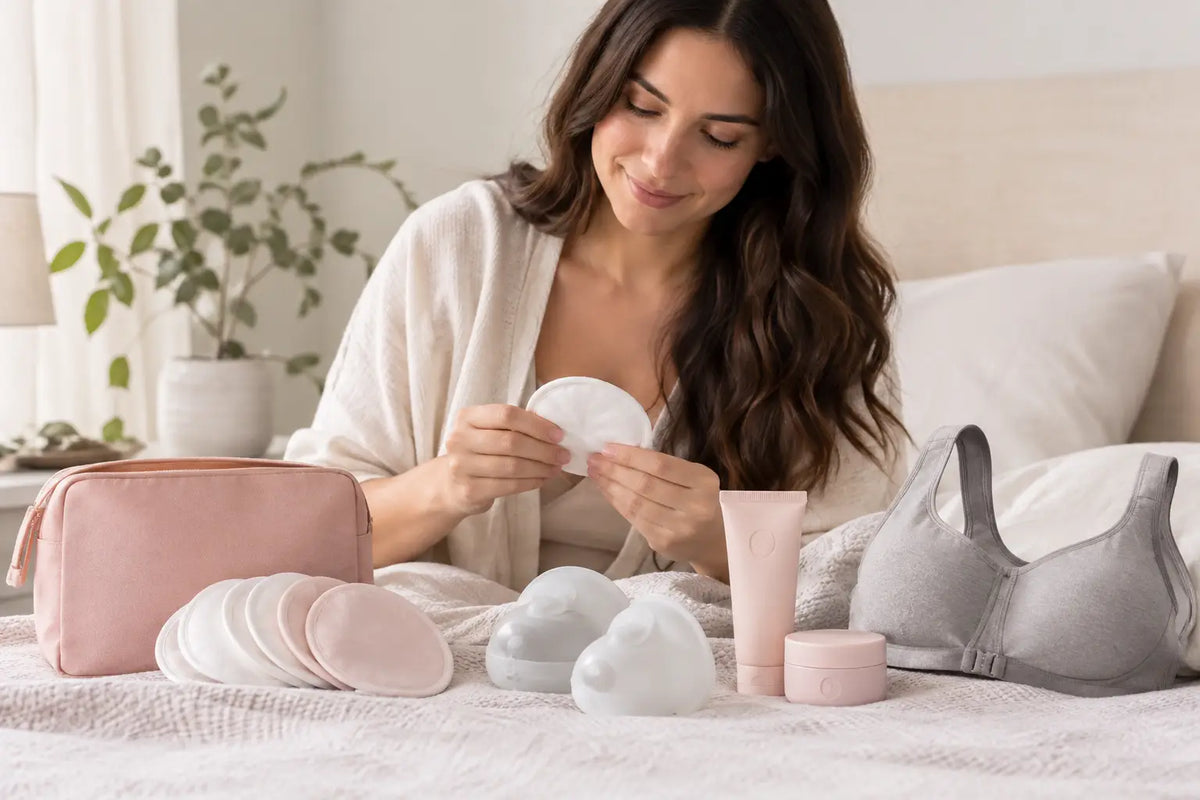
Reusable nursing pads for everyday leak protection
Leaking is common, particularly while your supply is finding its pattern. Soft reusable nursing pads create a breathable layer of protection inside your bra, helping you stay dry and comfortable during feeds, between feeds, and when you are away from home.
Bamboo nursing pads are especially lovely for sensitive skin because they are soft, washable, and gentle against the breast. Keep several pairs in rotation so you always have a clean, dry option ready. If a pad becomes damp, change it promptly. Dry skin is generally happier skin, especially when you are already dealing with tenderness.
Silver nipple covers for tender, sensitive skin
When nipples feel sore, even the fabric of a nursing bra can feel like too much. Silver nipple covers offer a simple protective barrier that reduces friction between feeds. Many mothers appreciate them during the early adjustment period, when tenderness can make every touch feel more noticeable.
Fit matters here. Covers should sit comfortably over the nipple without pressing or pinching the surrounding tissue. They are a comfort tool, not a reason to push through ongoing pain. If soreness is severe, worsening, or continues beyond the initial adjustment period, a lactation professional can help identify what is behind it.
Hot and cold therapy pads for changing needs
Breastfeeding comfort is rarely one-size-fits-all, which is why hot and cold therapy pads are so useful. Gentle warmth before feeding or pumping may help you relax and encourage milk flow. Cooling after a session can feel soothing when breasts feel full, tired, or sensitive.
Always use a fabric layer between the pad and your skin, and follow the product instructions for temperature and timing. The aim is comfort, never intense heat or cold. If you notice redness, fever, flu-like symptoms, or a painful area that does not improve, seek timely medical advice.
Cooling pads for immediate soothing comfort
Cooling pads are a quiet little luxury when your nipples need a break. They can provide a calming, refreshing sensation after feeding or pumping, particularly in the first weeks when your skin is adapting to frequent contact.
Look for pads made for breast and nipple care, with a comfortable texture and ingredients suitable for postpartum use. They are best viewed as part of a fuller care routine: gentle cleansing, air-drying when possible, proper positioning, and expert support if discomfort persists.
Flange inserts for a more personal pump fit
A pump can only feel as comfortable as its fit. Flange inserts help tailor the tunnel size of your breast pump so the nipple can move with less rubbing and excess pulling. For many pumping mothers, this small adjustment makes sessions feel noticeably more comfortable and can support more efficient milk expression.
There is no universal correct size. Nipples can also change in size during the postpartum period, so an insert that felt right in week one may need reassessment later. Signs that a fit may need attention include rubbing, blanching, swelling, pain, or drawing in too much surrounding breast tissue. Expert guidance is especially valuable if pumping is uncomfortable or your output has changed unexpectedly.
Nipple shields when they are genuinely needed
Nipple shields can be helpful in specific situations, such as when a mother is working through latch challenges or sensitive nipples with a lactation consultant's guidance. A well-fitted shield may offer temporary protection while you and your baby learn together.
The key word is temporary. A shield is not automatically the first answer to pain, and it is not right for every feeding journey. Because fit and use can affect milk transfer, it is wise to choose one with professional support and a clear plan for reassessment. You deserve care that looks at the reason for the challenge, not just the symptom.
Colostrum collectors for those precious early drops
In the final weeks of pregnancy, some mothers choose to collect colostrum if their healthcare provider has advised that it is appropriate. A sterile colostrum collector is designed for those very small, precious amounts, making collection and storage more manageable.
This is an accessory to use thoughtfully, not routinely. Antenatal expression is not suitable for every pregnancy, so always speak with your maternity care team first. If you are cleared to collect, having the right sterile tool can help you feel prepared without adding pressure to an already emotional season.
Wearable milk collectors for letdown and on-the-go moments
Milk collectors sit inside the bra and catch milk that may release from the opposite breast during feeding or at other times of spontaneous letdown. They can be particularly useful when you are tired of losing milk to a nursing pad or changing clothes more often than you would like.
Comfort and hygiene should guide your choice. Select a collector that sits smoothly under clothing, does not press into the breast, and is easy to clean. These are different from a pump accessory: their purpose is passive collection, not active expression. Empty and clean them promptly according to the manufacturer's instructions.
How to Choose Breast Care Accessories Without Overbuying
Start with the issue you want to make easier. If leaks are disrupting your day, begin with reusable nursing pads. If pumping feels uncomfortable, prioritize flange fit before adding more accessories. If your breasts feel swollen or tender, hot and cold therapy may offer more meaningful relief than another storage item.
It also helps to consider your routine. A mother who pumps regularly may benefit most from inserts, therapy pads, and comfortable leak protection. A mother who is mostly feeding directly may reach for nipple comfort products and milk collectors more often. Your needs may change from one week to the next, and that is completely normal.
Quality is worth considering because these products spend so much time against sensitive skin. Choose materials that are easy to clean, comfortable to wear, and made for repeated postpartum use. At Noora Motherhood, that combination of practical comfort and lactation-informed guidance is at the heart of every carefully chosen support tool.
A Gentle Reminder About Pain and Breast Changes
Accessories can make breastfeeding and pumping more comfortable, but they cannot replace individualized clinical care. Pain that is sharp, persistent, or associated with damaged skin deserves attention. So do breast changes such as fever, chills, a hot red area, a firm painful lump, or a sudden drop in how well feeding or pumping is going.
Reaching out early is not overreacting. A lactation consultant or healthcare professional can assess feeding, pumping fit, and breast health with the full context of your experience. Sometimes one small adjustment brings enormous relief.
You are doing amazing, mama. Let your accessories support you, not burden you: choose the pieces that bring comfort today, leave room for your needs to change tomorrow, and ask for expert care whenever your body tells you it needs more than a quick fix.


